

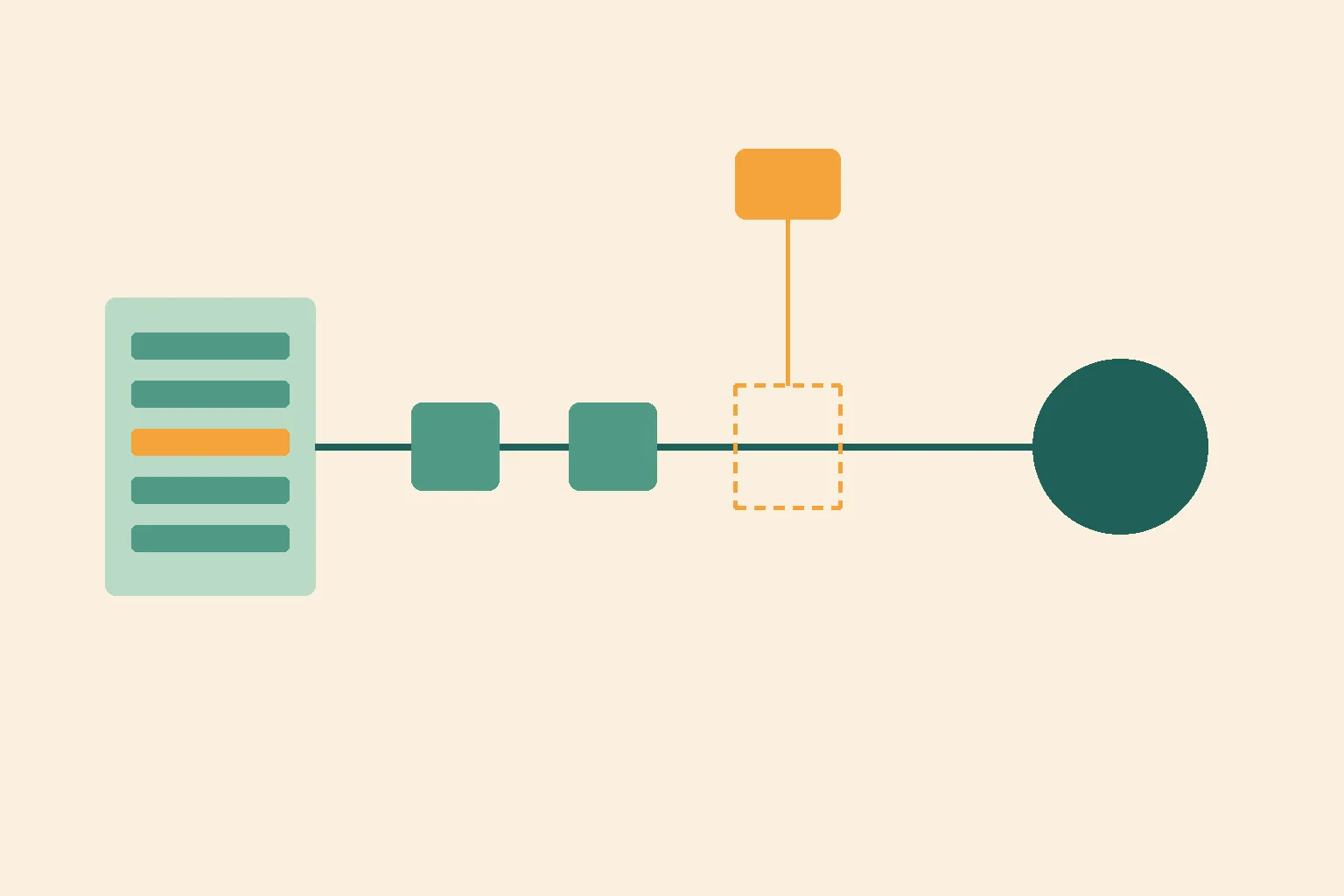
Every time someone on your team asks an AI tool a question, and every time an AI agent does a piece of work, a request goes out to a model. That request carries whatever was in it: a customer record, an invoice, a contract clause, sometimes a password or a key sitting in a file the agent was given. Most companies have never asked how many other companies handle that request on its way to the model, or who can read it there.
New research from Dragos, a security company, suggests the answer matters more than most buyers assume.
What Dragos found
On November 19, HD Moore, Dragos’s chief research officer, published the results of a test his team ran from July through November 2026. They sent about two million prompts to widely used AI services. Each prompt carried a unique fake credential, such as an AWS key, a hostname or a web address, so that any attempt to use it could be traced back to the exact prompt, model and route that carried it.
Then they watched which ones got used.
- At least three AI providers had attackers inside their systems. None of the three knew until Dragos told them. The earliest break-in dated to mid-July.
- In the largest case, every request sent during a few windows in late October was stolen. That included a couple hundred fake AWS keys. Some came from requests the provider rejected before any model ran, which tells Dragos the attacker was copying requests as they arrived, at the provider’s front door. The attacker used the keys for tens of thousands of AWS calls, including creating new user accounts.
- The strictest privacy setting didn’t protect the data. Some providers sell a setting called Zero Data Retention, which promises the prompt and response are not stored. In two of the breaches, some stolen requests carried that setting. As Moore puts it, “A privacy flag doesn’t help when the attacker is already inside.”
- On one AI marketplace, resellers could read prompts without breaking anything. According to Dragos, a seller only had to “list a model at the lowest price, enable request logging, and wait.” Some of those sellers then tried to use the fake credentials they found.
Why this matters more once you run AI agents
When a person types into a chat window, they usually think about what they paste. An AI agent sends whatever it can read to do its job. If it has access to your customer records, your billing system or a configuration file with a password in it, any of that can end up inside a request.
That puts a simple question in front of every owner: when your agents send work to a model, do you know every company the request passes through, and who you have a contract with at each step? If the AI comes built into software you pay for per seat, the honest answer is usually no.
Five steps to take this quarter
Dragos’s own recommendations make a practical checklist.
- Buy model access directly from the main AI providers. Avoid reseller marketplaces and routers that pass your requests to whoever is cheapest. Direct contracts don’t remove the risk, but you know who holds your data and what they’ve agreed to.
- Check where your requests actually go. Ask each AI vendor which providers sit behind their product, and confirm that a privacy setting changes the route your data takes, beyond the label on the request.
- Keep secrets out of prompts. Give agents only the access their job needs, keep passwords and keys out of the files they read, and turn on secret filtering where your tools offer it.
- Plant your own fake key. Put a canary credential in the context your agents use, and treat any use of it as a security incident.
- Keep the most sensitive work closest to home. For data you can’t afford to have copied, run models inside your own cloud account or on infrastructure you control.
How we set up the agents we build
We build agents to run in the client’s own cloud, on AWS or Azure, using the client’s own accounts with the model providers, such as Claude, GPT or Gemini. AI usage is billed at cost on those accounts, with no markup and no reseller in between. That means the client knows which provider handles each request and holds the contract with them directly.
It doesn’t make the risk zero, and we don’t claim it does. Dragos notes that first-tier providers can be breached too. What it gives an owner is a short, known path for their data, and the ability to change any part of it, including the model, without rebuilding the agents.
Five questions to ask about the AI that handles your data
- Which model providers receive our prompts, and do we have a contract with each one?
- Does any reseller, router or marketplace sit between us and the model?
- What data and credentials can each of our AI agents read?
- Do our privacy settings change where the data goes, or only how it’s labeled?
- Would we know if a key or password inside one of our prompts was used by someone else?
If you have recurring work you’d like an AI agent to take on, running in your own cloud from day one, show us the work. Describe it in about three minutes and we’ll send back a plan for your first agent: what it would do, what we’d measure, and how it goes live. If you’d rather talk it through, talk to an expert.
Sources
- Dragos, Three breaches, endless leaks: Your AI supply chain needs canaries, HD Moore, November 19, 2026.