

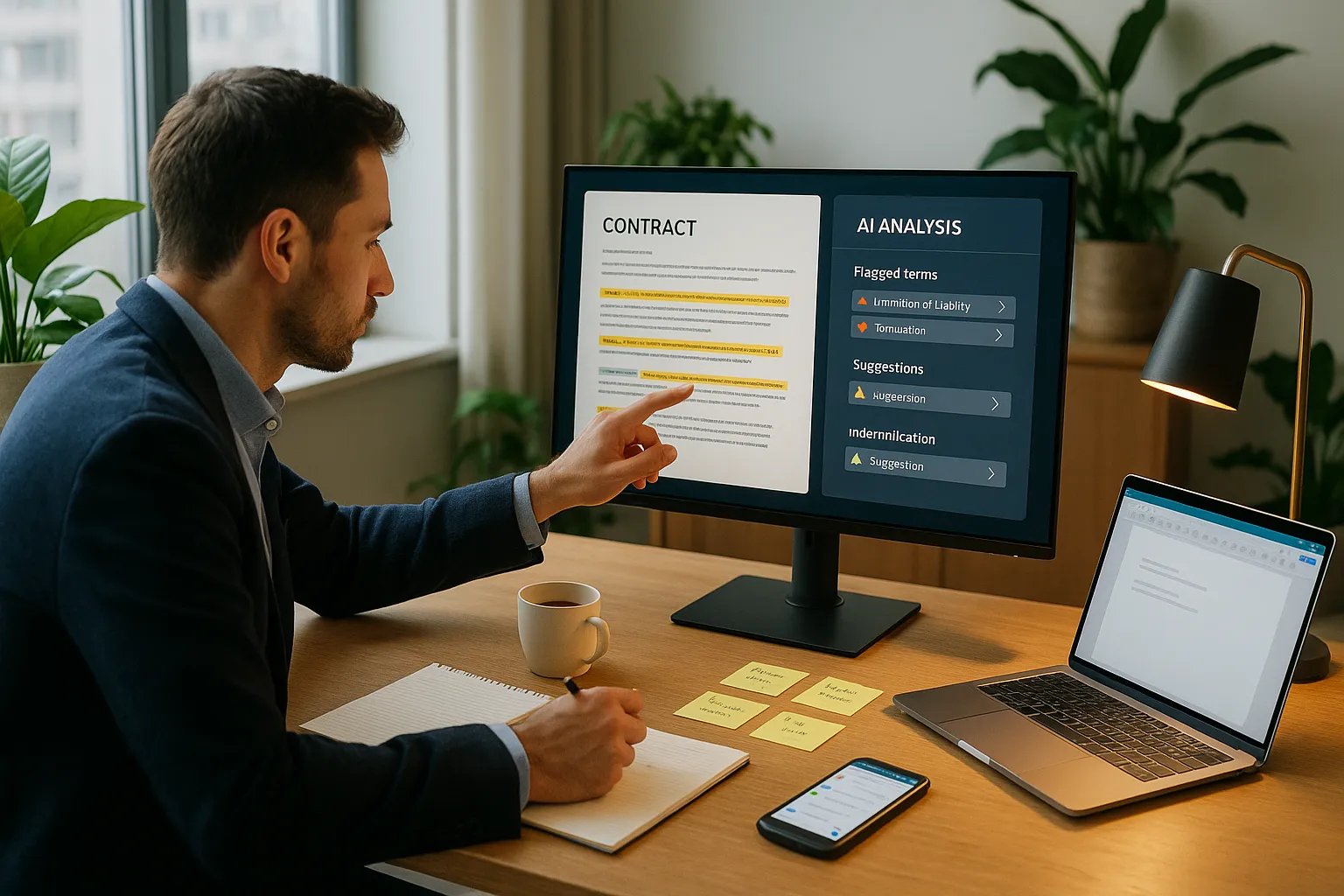
The RFP Response Problem That Drains Sales Teams
Every sales leader knows the scenario: a high-value RFP lands in your inbox with a two-week deadline. What follows is a scramble of epic proportions. Subject matter experts are pulled from projects. Previous proposals are hunted through shared drives. Pricing teams work overtime. Writers stitch together sections from different authors with mismatched tones. And through it all, your most expensive resources spend days on administrative work instead of selling.
The numbers are staggering. According to RFPIO’s industry research, the average enterprise proposal takes 40+ hours of collective effort to complete. Companies respond to dozens or hundreds of RFPs annually, making proposal development one of the most resource-intensive functions in B2B sales operations.
Yet most of this effort is repetitive. Studies show that 60-80% of RFP content comes from reused material. The same case studies, capability descriptions, security questionnaires, and technical specifications appear proposal after proposal with minor modifications. The intellectual challenge lies in customization and strategy, but the bulk of time goes to assembly and formatting.
This is precisely the kind of high-volume, pattern-rich work where AI excels. Not just basic automation, but intelligent systems that understand requirements, retrieve relevant content, and produce draft responses that capture your company’s voice and positioning.
How AI Proposal Automation Actually Works
AI proposal automation is not a single tool but an orchestrated system of capabilities that mirrors how your best proposal managers work, but at machine speed. Understanding this architecture helps you evaluate solutions and set realistic expectations.
flowchart TD
    A[RFP Document Received] --> B[AI Requirement Extraction]
    B --> C[Semantic Search: Knowledge Base]
    C --> D[Content Matching & Retrieval]
    D --> E[Gap Analysis: Missing Content]
    E --> F{Human Review Point}
    F -->|Gaps Identified| G[SME Input Request]
    F -->|Content Sufficient| H[AI Draft Generation]
    G --> H
    H --> I[Brand Voice & Compliance Check]
    I --> J[Human Review & Editing]
    J --> K[Final Proposal Assembly]
Stage 1: Intelligent Requirement Extraction
Modern AI systems do not just read RFPs. They parse and structure them. When an RFP arrives, the AI extracts individual requirements, categorizes them by type (technical, security, pricing, references), identifies mandatory versus optional elements, and flags unusual or custom requirements that need special attention.
This extraction process, which might take a human analyst hours to complete thoroughly, happens in minutes. More importantly, it creates a structured map of what the proposal must contain, which drives everything that follows.
Beyond Simple Parsing
Advanced systems use multi-pass extraction that first identifies sections, then extracts requirements within sections, and finally maps dependencies between requirements. This structured approach catches items that simpler tools miss.
Stage 2: Semantic Knowledge Retrieval
With requirements extracted, the AI searches your content library using semantic understanding rather than keyword matching. This distinction matters enormously. When an RFP asks about “disaster recovery procedures,” the AI retrieves content about business continuity, failover systems, and backup protocols because it understands these concepts are related, not because the exact phrase appears.
This semantic retrieval draws from multiple sources:
- Previous winning proposals: What worked before, adapted for new context
- Technical documentation: Product specifications, architecture documents, API references
- Case studies and references: Client success stories matched to relevant industry or use case
- Security and compliance materials: Certifications, audit reports, policy documents
- Pricing templates: Standard configurations, discount matrices, custom pricing precedents
The result is a relevance-ranked collection of source material for each requirement, giving the AI (and your team) the raw ingredients for a compelling response.
Stage 3: Gap Analysis and Human Collaboration
Here is where sophisticated AI proposal automation differs from basic document assembly. The system identifies gaps: requirements for which no adequate existing content exists.
Proposal Manager
❌Before AI
- •Manually scan entire RFP for requirements
- •Search through folders of past proposals
- •Email SMEs asking 'do we have content for X?'
- •Track responses in spreadsheets
- •Discover gaps at deadline time
✨With AI
- •AI extracts and categorizes all requirements
- •Semantic search surfaces relevant content instantly
- •Automated gap analysis identifies missing content
- •SME requests generated with specific context
- •Gaps identified immediately upon RFP receipt
📊 Metric Shift: Gap identification time reduced from days to minutes
Rather than discovering at deadline time that you have no content for a new compliance requirement, the AI flags this gap immediately. It can even generate draft SME questions that explain what is needed and why, reducing back-and-forth cycles.
Stage 4: Intelligent Draft Generation
With source content assembled and gaps addressed, the AI generates draft responses. This is more than text generation. The system must:
- Match the formality and tone of your established proposal voice
- Incorporate specific differentiators and proof points
- Ensure technical accuracy by grounding responses in source material
- Format responses to match RFP requirements (word limits, structure, etc.)
- Maintain consistency across sections written from different source materials
The output is not final copy. It is a strong first draft that captures the essential content and positioning, ready for human refinement and strategic enhancement.
Stage 5: Compliance and Quality Checks
Before human reviewers see the draft, AI performs automated quality checks:
- Requirement coverage: Has every extracted requirement been addressed?
- Consistency validation: Do sections contradict each other?
- Compliance flagging: Are required certifications, references, or disclosures included?
- Readability scoring: Is the language accessible to the likely evaluators?
These automated checks catch issues that human reviewers often miss under deadline pressure, improving both quality and consistency.
The Business Case for AI Proposal Automation
Organizations implementing AI proposal automation report dramatic improvements across multiple dimensions. Understanding these benefits helps justify investment and set appropriate success metrics.
Time Compression
The most visible benefit is speed. Tasks that previously took days compress to hours.
| Activity | Traditional Time | AI-Assisted Time | Improvement |
|---|---|---|---|
| RFP analysis and requirement extraction | 4-8 hours | 15-30 minutes | 90%+ reduction |
| Content search and retrieval | 8-16 hours | 30-60 minutes | 95%+ reduction |
| First draft creation | 20-40 hours | 2-4 hours | 85-90% reduction |
| Compliance review | 4-8 hours | 30 minutes + human review | 70-80% reduction |
| Total response cycle | 5-10 days | 1-2 days | 75-80% reduction |
This time compression is not just about efficiency. It fundamentally changes which opportunities you can pursue. RFPs with tight deadlines that previously required declining can now be attempted. High-quality responses can go out while competitors are still assembling first drafts.
Quality and Consistency
Speed means nothing if quality suffers. The data on AI proposal automation tells a different story: quality typically improves alongside speed.
Quality Improvements
Organizations report 20-35% improvements in proposal win rates after implementing AI-assisted proposal automation, attributed to more consistent messaging, better requirement coverage, and the ability to invest human effort in strategic differentiation rather than content assembly.
Why does quality improve? Several factors contribute:
- Complete requirement coverage: Automated tracking ensures nothing is missed
- Consistent positioning: AI maintains brand voice and key differentiators
- More time for strategy: Humans focus on winning, not assembling
- Reduced fatigue errors: Less rushed work under deadline pressure
Cost Economics
The economics of AI proposal automation compound over time. Consider a mid-size technology company responding to 100 RFPs annually:
Traditional approach:
- Average proposal effort: 50 person-hours
- Blended cost per hour: $100 (salary + overhead)
- Annual proposal cost: 5,000 hours x $100 = $500,000
- Win rate: 25%
- Cost per win: $20,000
AI-assisted approach:
- Average proposal effort: 15 person-hours
- AI platform cost: $50,000 annually
- Annual proposal cost: 1,500 hours x $100 + $50,000 = $200,000
- Win rate: 32% (improved due to quality and response rate)
- Cost per win: $6,250
The AI-assisted approach delivers 60% cost reduction and 37% more wins. These numbers are illustrative, but they reflect the range of outcomes organizations report.
Implementation: Building Your AI Proposal System
Moving from concept to reality requires thoughtful implementation. Here is a framework based on successful deployments.
Phase 1: Content Foundation (Weeks 1-4)
Your AI is only as good as the content it can access. Start by building a comprehensive, well-organized knowledge base.
Essential content categories:
- Company overview and differentiators
- Product and service descriptions
- Technical specifications and architecture
- Case studies organized by industry, use case, and outcome
- Security, compliance, and certification documentation
- Team bios and qualifications
- Pricing frameworks and standard terms
- Previous winning proposals (anonymized where necessary)
Content Quality Matters
AI amplifies whatever it finds. Poor-quality source content produces poor proposals. Invest time upfront in curating and improving your content library. Remove outdated materials, consolidate duplicates, and ensure accuracy.
Phase 2: Workflow Integration (Weeks 5-8)
AI proposal automation works best when integrated into existing workflows rather than bolted on as a separate process.
Key integration points:
- CRM connection: Pull opportunity context, stakeholder information, and relationship history
- Document management: Seamless access to contracts, SOWs, and previous deliverables
- Communication tools: SME requests and approvals through existing channels
- Project management: Track proposal status alongside other sales activities
Phase 3: Training and Calibration (Weeks 9-12)
Your AI system needs calibration to match your specific voice, positioning, and quality standards.
Calibration activities:
- Analyze winning proposals to identify successful patterns
- Define tone and voice guidelines the AI should follow
- Establish quality thresholds for automated checks
- Train the team on effective human-AI collaboration
- Create feedback loops to improve AI output over time
Phase 4: Continuous Optimization (Ongoing)
AI proposal systems improve with use. Implement systematic learning:
- Win/loss analysis: Which AI-generated content correlates with wins?
- Reviewer feedback: What patterns do human editors consistently change?
- Coverage metrics: Which requirement types still have content gaps?
- Time tracking: Where do bottlenecks remain in the process?
Real-World Application: The Autonomous Proposal Agent
The most advanced implementations go beyond assisted authoring to autonomous proposal agents that operate with minimal human intervention for routine RFPs.
flowchart LR
    A[RFP Intake] --> B[Complexity Assessment]
    B -->|Routine| C[Autonomous Processing]
    B -->|Complex| D[Human-in-the-Loop]
    C --> E[Auto-Generated Draft]
    D --> F[Collaborative Draft]
    E --> G[Quality Gate]
    F --> G
    G -->|Pass| H[Human Final Review]
    G -->|Fail| I[Route to Human]
    H --> J[Submission]
    I --> F
In this architecture, the AI autonomously handles routine RFPs that match established patterns: standard security questionnaires, recurring capability descriptions, familiar technical requirements. These proposals proceed through automated generation with human review only at the final stage.
Complex or strategic RFPs automatically route to human-in-the-loop processing where the AI assists but does not drive. The system learns the difference over time, continuously expanding what “routine” means as confidence grows.
This is the vision of agentic workflows applied to proposal management: AI that does not just assist but actively executes multi-step processes autonomously, escalating to humans only when needed. It is the approach that defines Enterprise Context Engineering, where AI systems have full access to company knowledge and can act intelligently on that context.
Addressing Common Concerns
Organizations considering AI proposal automation raise legitimate concerns. Here is how to think about them.
“Our Proposals Require Heavy Customization”
Every proposal requires some customization. The question is what percentage of effort should go to customization versus assembly. AI handles the assembly, freeing your team to focus entirely on customization and strategy.
Even with heavy customization requirements, AI typically handles 60-70% of content while generating significantly better starting points for custom sections through improved context and source material retrieval.
“We Are Concerned About Accuracy”
AI proposal systems are grounded in your verified content library, not generating information from thin air. Accuracy depends on source material quality plus appropriate human review.
Implement tiered review based on risk: high-stakes proposals get thorough human review, while routine questionnaires might need only spot-checks. This balances accuracy with efficiency.
“Our RFPs Are Highly Technical”
Technical complexity actually favors AI assistance. Technical content is typically more structured, with clearer requirements and more definitive correct answers. AI excels at retrieving precise technical specifications and ensuring consistency across technical sections.
The key is ensuring your knowledge base contains comprehensive, accurate technical documentation.
“We Are a Small Team”
Smaller teams often benefit most from AI proposal automation. Without dedicated proposal staff, RFPs pull salespeople and subject matter experts from revenue-generating activities. AI gives small teams proposal capabilities that previously required specialized resources.
The investment scales appropriately: lighter-weight solutions exist for smaller volumes, growing with your needs.
The Strategic Shift: From Response to Opportunity
The deepest impact of AI proposal automation is not operational but strategic. When proposals take days instead of weeks, your approach to opportunities fundamentally changes.
New strategic possibilities:
- Pursue more opportunities: Respond to RFPs you previously declined due to resource constraints
- Respond earlier: Get quality proposals in before competitors while they are still assembling
- Customize more deeply: Invest saved time in strategic differentiation rather than assembly
- Learn faster: Higher volume creates more data on what wins
- Scale without hiring: Grow proposal capacity without proportional headcount
Organizations that view AI proposal automation merely as cost reduction miss the larger opportunity. The real value is competitive advantage through speed, quality, and strategic focus.
The transformation from days to hours in RFP response is not science fiction. It is the current state of the art for organizations that have implemented comprehensive AI proposal automation. The technology exists. The economics are compelling. The question is not whether to automate proposal development but how quickly you can get there.
Transform Your Proposal Process
Ready to respond to RFPs in hours instead of days? metacto builds AI proposal automation systems that integrate with your existing sales infrastructure and learn your specific voice and positioning. Our Enterprise Context Engineering approach ensures AI has full access to the company knowledge it needs to generate compelling, accurate proposals.
How much can AI actually reduce proposal response time?
Organizations implementing comprehensive AI proposal automation typically see 75-85% reduction in total response time. An RFP that previously took 5-10 days can often be completed in 1-2 days. The specific improvement depends on RFP complexity, content library quality, and how well the AI system is calibrated to your processes.
Will AI proposals sound generic or lose our company voice?
Quality AI proposal systems are trained on your existing content and calibrated to your specific voice and positioning. The output reflects your style, not generic corporate language. Initial calibration and ongoing feedback loops ensure the AI learns and maintains your distinctive approach.
What content do I need to get started with AI proposal automation?
Start with company overviews, product descriptions, case studies, technical documentation, security and compliance materials, and previous winning proposals. The more comprehensive and well-organized your content library, the better the AI output. Most organizations begin with existing materials and improve them over time.
How does AI handle requirements for content that does not exist?
Sophisticated systems perform gap analysis to identify requirements without adequate existing content. They flag these gaps immediately upon RFP receipt rather than at deadline time, generate specific SME questions to fill gaps, and can draft initial responses for human completion based on related content.
Is AI proposal automation only for large enterprises?
No. Smaller teams often benefit most because they lack dedicated proposal staff. AI gives small sales teams proposal capabilities that previously required specialized resources. Solutions scale from lightweight implementations for smaller volumes to enterprise platforms for high-volume operations.
How do you ensure accuracy in AI-generated proposals?
AI proposal systems ground their output in your verified content library rather than generating information freely. Automated compliance and consistency checks catch many errors. Tiered human review based on proposal risk and complexity provides appropriate oversight. Accuracy improves over time through feedback loops.
What is the ROI on AI proposal automation investment?
Organizations typically see 50-70% reduction in proposal costs combined with improved win rates of 15-30%. A company responding to 100 RFPs annually might reduce costs from $500,000 to $200,000 while winning more deals. ROI typically materializes within 6-12 months of implementation.