

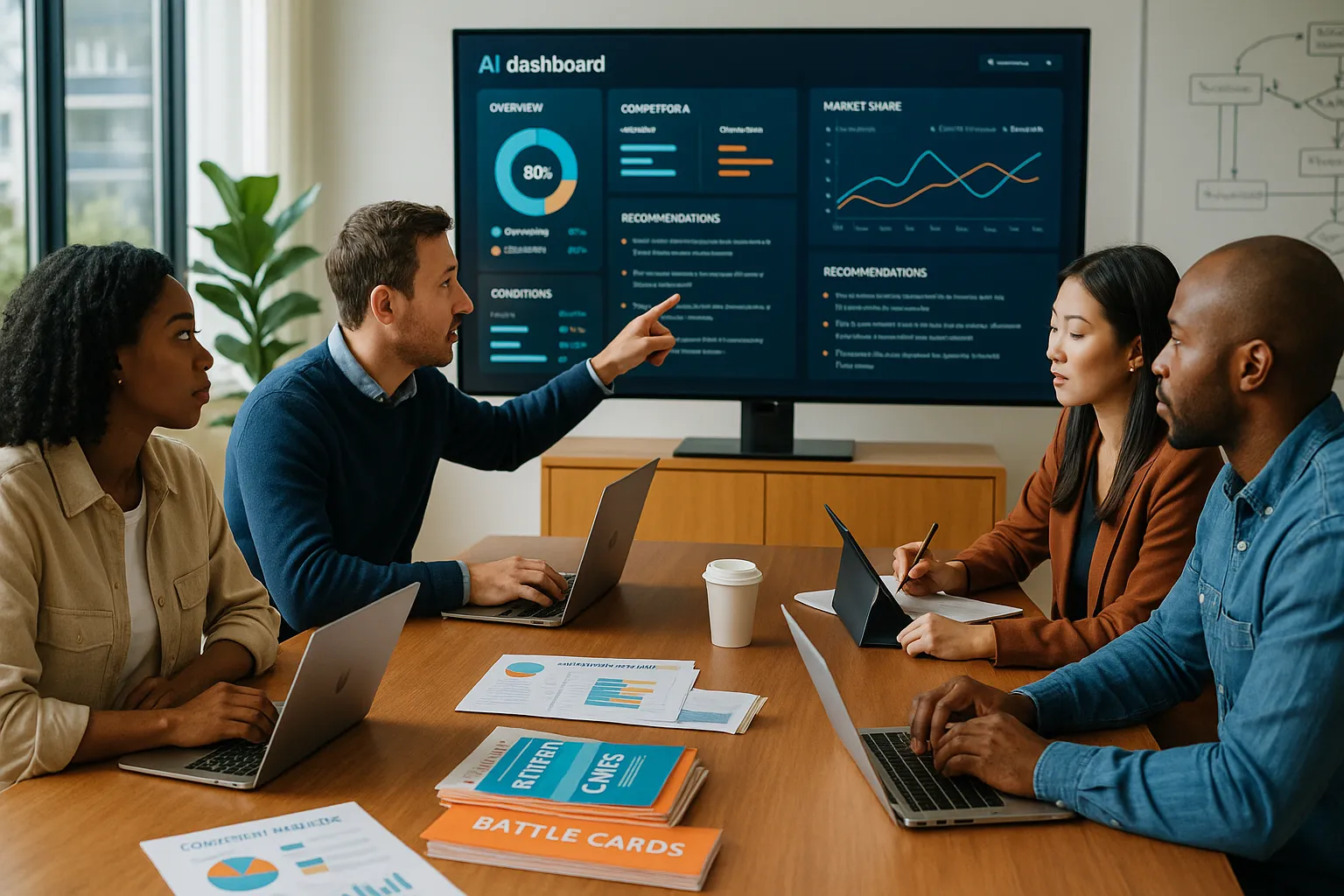
The Information Paradox in Sales
Every salesperson faces the same impossible choice before customer calls: spend 30 minutes gathering context from scattered sources, or wing it and hope nothing important was forgotten. Neither option is acceptable. The first destroys productivity; the second risks relationships and deals.
The information exists. Somewhere in your CRM there are notes from the last three meetings. Your marketing automation platform has engagement data. The support system shows recent tickets. Your colleague mentioned something important in Slack last week. The prospect’s company just announced a reorganization.
But this information is scattered across a dozen systems, buried in lengthy transcripts, and mixed with noise that does not matter for this particular conversation. Synthesizing it into actionable insight takes time most salespeople do not have.
This is the information paradox of modern sales: we have more data about our customers than ever before, yet salespeople frequently enter calls underprepared because extracting value from that data is too difficult.
AI summarization solves this paradox. Instead of forcing humans to synthesize information across systems, AI creates focused, actionable briefings tailored to specific needs and moments. The result is salespeople who walk into every conversation with the context they need to sell effectively.
What AI Sales Briefings Actually Look Like
AI summarization for sales goes far beyond condensing long documents. It involves understanding what information matters for specific situations and presenting it in formats that drive action.
The Pre-Meeting Briefing
Before any customer interaction, salespeople need quick orientation on the relationship state and conversation context.
Traditional preparation:
- Open CRM and scroll through activity history
- Search email for recent threads
- Review the last call recording (or skip because it is 45 minutes long)
- Check calendar for meeting notes from colleagues
- Look up the contact on LinkedIn for recent changes
- Attempt to remember what you discussed last time
AI-generated briefing:
MEETING BRIEFING: Acme Corp Discovery Call
Prepared: 10 minutes before scheduled time

RELATIONSHIP STATUS
- 3rd meeting; strong engagement from technical team, limited executive visibility
- Champion: Sarah Chen (VP Engineering) - highly engaged, internal advocate
- Missing stakeholder: CFO involvement not yet secured despite budget discussions

LAST INTERACTION SUMMARY (March 15 call, 52 minutes)
Sarah expressed urgency around Q3 deadline. Key concerns:
- Integration complexity with legacy Oracle systems
- Internal IT resistance to cloud solutions
- Need to demonstrate ROI to finance before procurement

ENGAGEMENT SIGNALS (past 2 weeks)
- Sarah viewed pricing page 4x, shared case study internally
- Technical team attended webinar on integration patterns
- No activity from finance contacts despite outreach

COMPANY CONTEXT
- Announced 15% workforce reduction last week
- New CTO started February (background in cloud transformation)
- Competitor XYZ mentioned in industry analyst report yesterday

SUGGESTED FOCUS AREAS
1. Address integration concerns with Oracle-specific case study
2. Explore new CTO as potential executive sponsor
3. Probe impact of workforce reduction on project timeline
4. Prepare ROI framework for CFO conversation

OPEN QUESTIONS TO RESOLVE
- Budget approval process after restructuring?
- New CTO's priorities and involvement level?
- Timeline implications of recent changes?
Context Compression
This briefing synthesizes information from 8+ hours of interactions, multiple systems, and external intelligence into a 2-minute read. The AI does not just summarize; it analyzes what matters for this specific moment.
The Deal Status Summary
Sales managers need clear visibility into deal status without reading through pages of notes or conducting lengthy pipeline reviews.
Sales Manager
❌Before AI
- •30-minute pipeline review calls per rep
- •Asking 'what's the status?' repeatedly
- •Relying on subjective rep assessments
- •Discovering issues at quarter end
- •Coaching based on incomplete information
✨With AI
- •Real-time deal intelligence dashboards
- •Objective status based on activity data
- •Early warning signals automatically surfaced
- •Issues visible weeks before they're critical
- •Coaching based on specific, documented moments
📊 Metric Shift: Pipeline visibility transformation
AI-generated deal summary:
DEAL SUMMARY: Acme Corp Enterprise License

DEAL HEALTH: YELLOW - Attention Needed
Stage: Negotiation | Amount: $180,000 | Close Date: April 30

WHY YELLOW:
- Champion engagement dropped 40% vs. previous stage
- No executive meeting despite 3 attempts over 2 weeks
- Competitor mentioned twice in recent calls (Competitor Y)
- Technical validation pending for 12 days (avg: 5 days)

WHAT'S WORKING:
- Technical team unanimously positive in evaluation
- Integration POC completed successfully
- Budget verbally confirmed by VP Engineering

RISK FACTORS:
- Economic buyer (CFO) not engaged
- Recent company restructuring may affect timeline
- Competitor Y actively proposing alternative

RECOMMENDED ACTIONS:
1. Escalate executive outreach through your network
2. Address competitor Y differentiation in next technical call
3. Create urgency around Q3 deadline mentioned by champion

NEXT SCHEDULED ACTIVITY:
Technical deep-dive call, March 22 at 2pm (Sarah Chen + IT team)
The Account Intelligence Digest
For strategic accounts, salespeople need ongoing awareness of developments without constant monitoring.
AI-generated account digest (weekly):
WEEKLY DIGEST: Acme Corp Portfolio

RELATIONSHIP ACTIVITY
- 4 meetings held (2 with existing sponsors, 2 with new contacts)
- Response rate: 78% (up from 65% last week)
- New contact identified: Mike Johnson, Director of IT Security

KEY DEVELOPMENTS
Company News:
- Partnership announced with TechCorp (potential integration opportunity)
- Q1 earnings call highlighted digital transformation as priority
- CTO quoted in industry publication about cloud strategy

Engagement Patterns:
- Increased activity from IT Security team (5 website visits)
- Product team downloaded 3 technical whitepapers
- Support tickets down 30% following last month's training

Competitive Intelligence:
- Competitor Y spotted at Acme's industry conference booth
- Job posting suggests Acme evaluating new vendor management tools

EXPANSION OPPORTUNITIES
- Security module interest based on recent activity patterns
- Additional department (Marketing) mentioned in champion meeting
- Contract renewal in 6 months - begin expansion conversation

ACTION ITEMS FOR THIS WEEK
1. Schedule introduction with Mike Johnson (IT Security)
2. Share TechCorp integration case study with technical sponsor
3. Prepare expansion proposal for quarterly business review
The Architecture of Intelligent Summarization
Creating briefings that actually help requires more than text compression. It requires understanding context, relevance, and purpose.
flowchart TD
    A[Data Sources] --> B[Information Extraction]
    B --> C[Context Assembly]
    C --> D[Relevance Filtering]
    D --> E[Insight Generation]
    E --> F[Format Selection]
    F --> G[Briefing Delivery]

    H[Purpose Context] --> D
    I[User Preferences] --> F
    J[Timing Context] --> G
Stage 1: Information Extraction
AI pulls raw information from multiple sources:
Internal systems:
- CRM records and activity logs
- Email and calendar data
- Call recordings and transcripts
- Marketing automation engagement
- Support and success interactions
- Internal communications (Slack, Teams)
External sources:
- Company news and press releases
- Social media activity
- Industry analyst reports
- Competitive intelligence feeds
- Job postings and organizational changes
- Financial filings and reports
Stage 2: Context Assembly
Raw information becomes useful only when assembled with context. The AI understands:
- Relationship history: Who has interacted with this account, when, and how
- Deal context: Current stage, stakeholders, obstacles, and timeline
- Account profile: Industry, size, technology stack, and strategic priorities
- User role: What this specific person needs to know
Stage 3: Relevance Filtering
Not all information matters equally. AI applies relevance filters based on:
Recency: Recent information typically matters more than old Impact: Changes and developments matter more than static facts Specificity: Information directly relevant to current objectives Actionability: Insights that suggest specific actions to take Novelty: New information not already known to the user
The Signal-to-Noise Challenge
The hardest problem in AI summarization is not finding information; it is deciding what to exclude. Effective briefings are as notable for what they leave out as what they include.
Stage 4: Insight Generation
Beyond summarizing what happened, AI generates insights about what it means:
- Pattern recognition: “Engagement has increased 40% since the technical demo”
- Risk identification: “No executive activity despite being in negotiation stage”
- Opportunity spotting: “Recent company announcement suggests expansion interest”
- Comparison analysis: “This deal is progressing 30% faster than similar opportunities”
Stage 5: Format Selection
Different situations require different briefing formats:
| Situation | Format | Length | Focus |
|---|---|---|---|
| Pre-meeting prep | Structured briefing | 1-2 pages | Context and conversation strategy |
| Pipeline review | Deal summary card | Half page | Status, risk, and next steps |
| Account planning | Strategic digest | 2-3 pages | Trends, opportunities, threats |
| Executive update | Dashboard highlight | Bullet points | Key numbers and exceptions |
| Mobile check-in | Quick summary | 3-5 sentences | Essential facts only |
Stage 6: Delivery Timing
The best briefing delivered at the wrong time has no impact. AI considers optimal delivery:
- Pre-meeting: 10-15 minutes before scheduled calls
- Morning digest: Start of day for account managers
- Alert-driven: When significant changes occur
- On-demand: Available instantly when requested
- Workflow-integrated: Surfaced within tools users already use
Practical Implementation Patterns
Theory becomes value when implemented in real workflows. Here are patterns that work.
Pattern 1: The Meeting Preparation Flow
Trigger: Calendar event with external attendee 15 minutes away
Process:
- Identify meeting participants and account
- Pull relevant context from all connected systems
- Analyze recent activity and changes
- Generate purpose-appropriate briefing
- Deliver via preferred channel (email, Slack, app notification)
Customization levers:
- Lead time before meeting (10, 15, 30 minutes)
- Briefing depth (quick summary vs. comprehensive)
- Delivery channel preferences
- Included/excluded information types
Pattern 2: The Pipeline Intelligence Dashboard
Trigger: Continuous, with scheduled digest delivery
Process:
- Monitor all deals in pipeline continuously
- Detect changes, risks, and opportunities
- Calculate deal health scores based on activity patterns
- Generate manager-level summaries with drill-down capability
- Deliver daily digest plus real-time alerts for critical changes
Dashboard elements:
- Overall pipeline health score with trend
- Deals requiring attention (yellow/red status)
- Recent wins and losses with key factor analysis
- Activity gaps and coverage issues
- Forecast confidence by segment
Pattern 3: The Account Planning Intelligence
Trigger: Quarterly planning cycle or on-demand
Process:
- Compile comprehensive account history
- Analyze relationship strength across stakeholders
- Map product adoption and white space
- Identify expansion opportunities and risks
- Generate strategic account brief with recommended actions
Output sections:
- Relationship health assessment
- Product penetration analysis
- Competitive position summary
- Expansion opportunity ranking
- Risk factors and mitigation strategies
- Recommended quarterly objectives
Pattern 4: The Call Debrief and Follow-Up
Trigger: Completed customer meeting
Process:
- Receive call recording or notes
- Extract key discussion points and action items
- Identify changes in sentiment or buying signals
- Generate meeting summary for CRM logging
- Draft follow-up communication
- Update deal intelligence
Outputs:
- Concise meeting summary for CRM
- Action item checklist with owners
- Suggested follow-up email draft
- Deal stage recommendation based on conversation
- Risk or opportunity alerts if significant changes detected
The Executive Digital Twin Connection
The most sophisticated AI summarization goes beyond information synthesis to represent judgment and priorities.
Consider what an experienced sales executive does when reviewing deal status. They do not just read the facts; they apply judgment:
- Is this deal progressing appropriately given the stakes?
- Does the activity pattern suggest genuine buyer intent?
- Are there warning signs the rep might be missing?
- What would I prioritize if this were my deal?
This kind of judgment-infused summarization is what we call the Executive Digital Twin: AI that has been trained to represent specific leadership perspectives and priorities.
Judgment at Scale
An Executive Digital Twin does not just summarize what happened. It evaluates deals the way your best sales leader would, surfacing the same insights and concerns, but for every deal, every day, without the time constraints that limit human review.
Example: Judgment-enhanced deal summary
DEAL REVIEW: Acme Corp Enterprise License
AI Assessment mimicking VP Sales perspective

OVERALL ASSESSMENT: CONCERNED
This deal shows classic signs of stalling in late stages.

WHAT CONCERNS ME:
The champion has been highly engaged, but we've seen this pattern before
- high technical enthusiasm without economic buyer involvement. In similar
deals, we win 23% of the time when CFO engagement comes this late.

The competitor mention in the last two calls is a red flag. When buyers
bring up alternatives at this stage, they're usually using us for price
leverage or genuinely reconsidering the decision.

WHAT I'D DO:
1. Stop technical discussions until we secure an executive meeting. More
   technical content won't help if the business case isn't landing with
   finance.

2. Ask Sarah directly: "What needs to happen for you to recommend us to
   your CFO?" Her answer will reveal whether she's actually our champion
   or just our contact.

3. Have our executive reach out peer-to-peer. The new CTO is an unknown;
   let's understand where he stands before this goes to final decision.

FORECAST RECOMMENDATION: Move to Commit with conditions
Conditions: Executive meeting scheduled within 10 days, or reclassify to
Pipeline with extended timeline.
This kind of analysis represents genuine judgment applied at scale, the foundation of AI that does not just inform but guides.
Measuring Summarization Impact
AI summarization should demonstrate measurable impact on sales outcomes.
Efficiency Metrics
| Metric | Before AI | After AI | Impact |
|---|---|---|---|
| Pre-meeting prep time | 15-30 min | 2-5 min | 80% reduction |
| Pipeline review time | 45-60 min/rep | 15-20 min | 65% reduction |
| CRM update time | 10-15 min/meeting | 2-3 min | 80% reduction |
| Account research time | 30-60 min | 5-10 min | 80% reduction |
Effectiveness Metrics
| Metric | Typical Improvement |
|---|---|
| Meeting conversion rate | 10-20% increase |
| Deal velocity | 15-25% faster |
| Win rate | 10-20% improvement |
| Forecast accuracy | 15-30% improvement |
| Customer satisfaction scores | 10-15% increase |
Adoption Indicators
| Metric | Target |
|---|---|
| Briefing open rate | 80%+ |
| Pre-meeting briefing usage | 90%+ of scheduled meetings |
| User satisfaction rating | 4+ out of 5 |
| Feature request volume | Decreasing over time |
Correlation vs. Causation
Improvements in sales metrics have many contributing factors. Isolate AI summarization impact by comparing teams with and without access, or by analyzing performance before and after adoption with controls for other changes.
Building Your AI Summarization Capability
Moving from concept to implementation requires deliberate planning.
Phase 1: Foundation (Weeks 1-4)
Data connectivity:
- Integrate CRM as primary data source
- Connect email and calendar systems
- Add call recording/transcript integration
- Establish external data feeds
Baseline establishment:
- Measure current meeting preparation time
- Document existing information workflows
- Survey user needs and preferences
- Establish success metrics
Phase 2: Core Briefings (Weeks 5-8)
Meeting preparation:
- Deploy pre-meeting briefing for scheduled calls
- Tune relevance filtering based on feedback
- Optimize delivery timing and channel
- Gather user feedback on content quality
Deal summaries:
- Implement deal health scoring
- Create manager dashboard views
- Configure alert thresholds
- Train users on interpretation
Phase 3: Advanced Capabilities (Weeks 9-12)
Account intelligence:
- Deploy weekly account digests
- Add external intelligence feeds
- Implement expansion opportunity detection
- Create strategic planning briefs
Workflow integration:
- Integrate with CRM interface
- Add mobile delivery options
- Enable on-demand generation
- Build follow-up automation
Phase 4: Optimization (Ongoing)
Continuous improvement:
- Analyze usage patterns and feedback
- Refine relevance algorithms
- Expand data sources
- Enhance insight generation
The transformation from information overload to actionable intelligence represents one of the clearest wins for AI in sales operations. When salespeople have the context they need, delivered when they need it, in formats that drive action, every customer interaction improves.
This is not incremental optimization. It is a fundamental shift in how sales teams operate: from humans struggling to synthesize scattered data to AI providing curated intelligence that humans apply with their uniquely valuable judgment and relationship skills.
Transform Sales Intelligence
Ready to give your sales team the briefings they need to close more deals? metacto builds AI summarization systems that connect to your full data ecosystem and deliver actionable intelligence exactly when your team needs it. Our Executive Digital Twin approach ensures briefings reflect not just information but the judgment your best leaders would apply.
How does AI summarization differ from CRM dashboards and reports?
CRM dashboards show data; AI summarization provides insight. Instead of displaying numbers for users to interpret, AI synthesizes information across sources, filters for relevance, generates insights about what the data means, and presents it in formats optimized for specific moments and needs. The user gets answers, not raw data.
How does the AI know what information is relevant for each situation?
AI applies context-aware relevance filtering based on multiple factors: the purpose of the briefing (meeting prep vs. deal review), the user's role and preferences, the relationship and deal stage, recency and impact of information, and patterns learned from what users find valuable. The system improves over time based on feedback and usage.
What data sources are needed for effective AI summarization?
Minimum requirements include CRM data, email and calendar integration, and ideally call recording transcripts. Additional valuable sources include marketing automation, support systems, financial data, and external intelligence feeds. More connected sources enable richer, more complete briefings.
How do you ensure briefings are accurate?
AI summarization grounds output in source data rather than generating information. Briefings cite sources, making it easy to verify claims. Systems include confidence indicators for insights and flag when data may be incomplete. Human review of early outputs helps tune accuracy before broad deployment.
Can briefings be customized for different roles?
Yes. Sales reps receive briefings focused on conversation preparation and relationship context. Managers see pipeline health and coaching opportunities. Executives get high-level summaries with exceptions requiring attention. Customization includes content selection, format, depth, and delivery preferences.
How does this integrate with existing tools?
AI summarization integrates with existing workflows rather than requiring new tools. Briefings deliver via email, Slack, Teams, or mobile notifications. Dashboards embed in CRM interfaces. The goal is surfacing intelligence within tools people already use rather than creating another place to check.
What is the typical ROI timeline?
Most organizations see measurable efficiency gains within 30-60 days: reduced meeting prep time, faster deal updates, less time searching for information. Effectiveness improvements (better win rates, faster deals) typically materialize over 3-6 months as better-prepared salespeople consistently outperform in customer interactions.