Introduction
In the intricate and fast-paced world of logistics, efficiency is not just a goal; it is the cornerstone of survival and success. The physical movement of goods, from a single parcel to a fleet of shipping containers, is a symphony of coordinated actions where a single misstep can lead to cascading delays, increased costs, and dissatisfied customers. Managing this complexity requires more than spreadsheets and phone calls; it demands powerful, intelligent technology. This is where Transportation Management System (TMS) applications become indispensable.
However, developing a robust Transportation Management app is a formidable undertaking, fraught with technical, regulatory, and financial challenges. From ensuring pinpoint real-time tracking across unreliable networks to navigating a labyrinth of international data protection laws, the path to creating an effective TMS is complex. Many organizations that attempt this journey in-house find their resources strained and their projects falling short of expectations.
This article serves as a comprehensive guide to custom Transportation Management app development. We will delve into what these applications are, explore the significant hurdles that make in-house development so difficult, and articulate why a custom-built solution is often the superior choice. Furthermore, we will provide insights into development costs and introduce the top development companies that can turn your vision into a reality.
Leading this list is metacto, a top US-based, AI-powered app development firm with over 20 years of experience launching more than 100 successful applications. At metacto, we understand the nuances of building complex, mission-critical systems. We will show you how partnering with an experienced agency like ours can help you navigate the challenges of TMS development and build a powerful tool that drives your business forward.
What is a Transportation Management App?
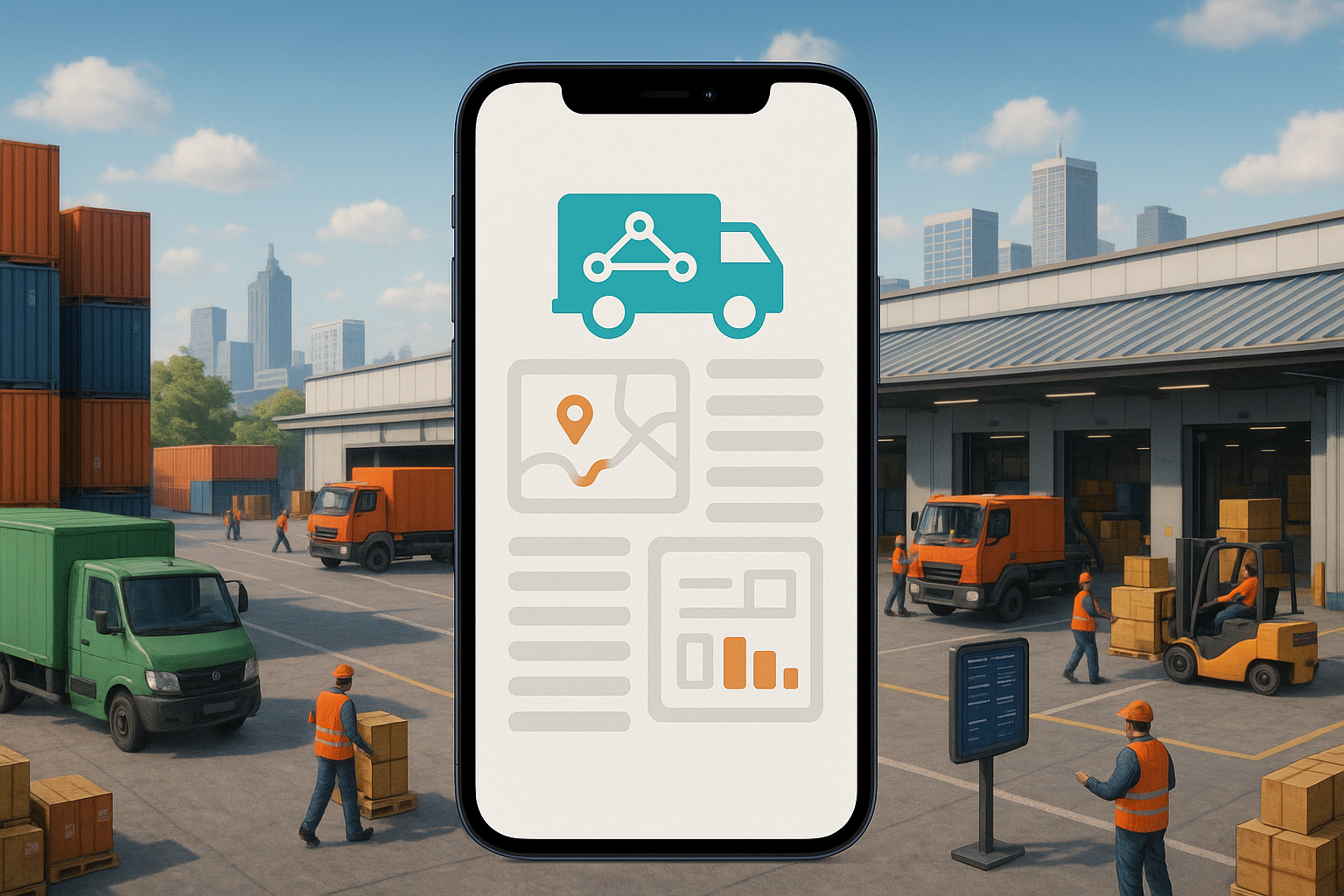
A Transportation Management app, often the mobile or web interface of a larger Transportation Management System (TMS), is a specialized software platform designed to streamline and optimize the entire lifecycle of shipping and logistics. It serves as a central command center for planning, executing, and monitoring the physical movement of goods, providing businesses with visibility and control over their supply chain.
The core purpose of a TMS app is to transform logistics from a reactive, manual process into a proactive, data-driven operation. To achieve this, these applications must perform several critical functions:
- Planning and Optimization: The system must handle the immense challenge of developing advanced algorithms to select the best possible route. This isn’t merely about finding the shortest distance; it involves calculating optimal paths based on a multitude of variables, including current traffic conditions, weather forecasts, specific delivery windows, vehicle capacity, and cost-efficiency.
- Execution and Tracking: A primary function is providing precision real-time tracing of shipments and vehicles. This gives stakeholders—from dispatchers to the end customer—complete visibility into where a shipment is at any given moment. This feature is crucial for managing expectations and responding to inquiries swiftly.
- Data Management and Analytics: Logistics operations generate a staggering volume of information. A key requirement is that large amounts of data from different origins ought to be handled by the system without loss of performance. This includes order details, vehicle diagnostics, driver logs, and delivery confirmations. A robust TMS app aggregates this data, processes it, and presents it through analytics dashboards to inform better decision-making.
- Dynamic Response: The reality of transportation is that plans change. A truck gets a flat tire, a port is congested, or a customer has a last-minute request. Therefore, it is necessary to dynamically reroute deliveries following some changes and problems as regards time. This agility is a hallmark of an advanced TMS, allowing businesses to adapt to unforeseen events with minimal disruption.
- Communication and Transparency: In an age where consumers demand consistency and information, TMS apps bridge the communication gap. Providing real-time updates about shipping to clients is a critical feature, though it may not be easy to achieve. These platforms ensure that all stakeholders are informed, fostering trust and improving customer service.
Ultimately, a well-designed Transportation Management app empowers businesses to reduce freight costs, improve delivery efficiency, enhance customer satisfaction, and gain a clear, comprehensive view of their entire transportation network.
Reasons That It Is Difficult to Develop a Transportation Management App In-House
Embarking on the development of a Transportation Management app without the backing of a specialized team is a venture laden with significant and often underestimated challenges. The complexities extend far beyond typical app development, touching on intricate technical problems, stringent legal requirements, and substantial financial commitments. Here’s a detailed breakdown of why in-house development is so difficult.
Technical and Algorithmic Complexity
The technical foundation of a TMS app is its most demanding aspect. It requires a level of sophistication that most generalist in-house IT teams are not equipped to handle.
- Real-Time Tracking and Connectivity: Achieving precision real-time tracing of shipments and vehicles is a cornerstone feature, yet it is incredibly complex. The system must contend with constant GPS errors and issues of connectivity, especially as vehicles travel through remote areas with spotty cellular coverage. Building a system that can gracefully handle data gaps, cache location points, and present a seamless tracking experience requires deep expertise in mobile hardware, network protocols, and data synchronization.
- Advanced Route Optimization: Developing advanced algorithms to select the best route is a monumental task. This is not a simple A-to-B mapping problem. It’s a multi-variable optimization challenge that must weigh traffic conditions, weather forecasts, delivery windows, vehicle capacity, fuel costs, and even driver hours-of-service regulations. These algorithms require specialists in operations research and data science to build and continuously refine.
- Dynamic Rerouting: The logistics world is in constant flux. An effective TMS must be able to dynamically reroute deliveries in response to real-time events. This requires a system that can instantaneously process new information—an accident report, a sudden weather change—and recalculate optimal routes for an entire fleet without a second of downtime. The computational logic for this is non-trivial.
- Big Data Performance: A successful TMS must process a torrent of information. The system must be architected to handle large amounts of data from different origins—GPS pings, sensor data, order entries, electronic data interchange (EDI) messages—without loss of performance. A poorly designed database or backend can quickly buckle under this load, leading to a slow, unresponsive application that frustrates users and fails in its core mission.
Security and Regulatory Compliance
Beyond the technical hurdles, a TMS app must navigate a complex web of legal and security obligations, where failure can result in severe financial and reputational damage.
- Data Privacy and Security: The system will handle highly sensitive information. It is paramount to ensure sensitive customer data is kept confidential. This includes shipment contents, delivery addresses, and payment information. Building a secure application requires expertise in encryption, secure authentication, and defense against a wide array of cyber threats.
- Meeting Data Protection Standards: It can become incredibly difficult when an organization strives towards meeting data protection standards. These regulations are not optional; meeting data protection standards is required in the European Union (under GDPR) and is also mandated in other parts of the world. An in-house team must possess a deep and current understanding of these intricate legal frameworks to ensure the app is compliant from the ground up.
- Navigating Regional Laws: The complexity multiplies when operating across different jurisdictions. Adhering to various regional laws on logistics and transport can make any logistics app development complicated. These laws can govern everything from customs declarations and freight documentation to driver work hours and vehicle weight limits. The app must be flexible enough to accommodate this legal patchwork.
Infrastructure, Cost, and Maintenance
The resource commitment required for a TMS app is substantial, both upfront and over the long term.
- Infrastructure and Connectivity Disparities: A significant challenge arises from differences in infrastructure strength as well as connectivity levels across regions. An app that works perfectly in a dense urban area may fail completely in a rural or less-developed region. The development team must account for this variability, building features for offline functionality and low-bandwidth environments.
- High Initial and Long-Term Costs: TMS projects can strain budgets since they require high initial logistics app development costs. This involves hiring skilled developers, data scientists, and UX designers, as well as investing on modern technologies and cloud infrastructure. Furthermore, the financial commitment does not end at launch. The long-term costs involve continued support, updating as well as maintenance of logistics applications to fix bugs, add features, and adapt to changing market needs.
These intertwined challenges demonstrate why building a TMS app is not a suitable project for most in-house teams. It requires a rare combination of specialized technical talent, legal expertise, and project management experience. This is precisely why partnering with a seasoned development agency like metacto is the most prudent path forward. We bring a dedicated team of experts who have navigated these complexities before, ensuring your project is built correctly, securely, and efficiently from day one.
Why Custom App Development for Transportation Management
When a business decides to implement a TMS, it faces a critical choice: adopt an off-the-shelf, one-size-fits-all solution, or invest in a custom-developed application. While pre-built software may seem like a faster and cheaper option initially, the unique and dynamic nature of logistics operations often makes a custom app the far superior long-term investment.
Off-the-shelf solutions are designed to serve the “average” company. They provide a standard set of features that may cover the basics but will inevitably fail to address the specific workflows, unique challenges, and strategic goals of your business. You are forced to adapt your processes to the software’s limitations, rather than having software that adapts to and enhances your processes.
Custom app development, in contrast, offers a solution that is meticulously crafted to meet your precise needs. Here are the compelling reasons to choose this path:
- Tailored to Your Unique Operations: Every logistics company has its own secret sauce—proprietary routing methods, specific customer service protocols, or unique ways of managing a specialized fleet. A custom TMS app can be built around these unique processes, amplifying your strengths instead of forcing you into a generic mold. It can integrate seamlessly with your existing operational flow, feeling like a natural extension of your business.
- Unmatched Scalability and Flexibility: Your business is not static, and your software shouldn’t be either. A custom application is designed with growth in mind. As you expand your fleet, enter new markets, or increase shipment volume, the app can be scaled and modified to handle the increased load and new requirements. You are in control of the development roadmap, free to add new features as your business evolves.
- Seamless Integration with Existing Systems: Logistics operations rarely exist in a vacuum. They rely on a network of other software, including Enterprise Resource Planning (ERP), Warehouse Management Systems (WMS), and Customer Relationship Management (CRM) platforms. A custom TMS can be engineered to integrate flawlessly with these systems, creating a unified data ecosystem that eliminates manual data entry, reduces errors, and provides a single source of truth across your organization.
- Creation of a Competitive Advantage: In a crowded market, technology can be a powerful differentiator. By investing in a custom app, you can build features that your competitors, who are using generic software, simply cannot offer. This could be a more advanced, AI-powered route optimization algorithm that slashes fuel costs, a highly transparent customer portal that reduces service calls, or a driver-facing app that dramatically improves efficiency and morale. Our expertise in AI Development can help you build these intelligent features that set you apart.
- Optimized User Experience (UX): Off-the-shelf software often suffers from a cluttered interface, with countless features you don’t need getting in the way of the ones you do. A custom app is designed with your specific users—dispatchers, drivers, managers, and customers—in mind. The result is an intuitive, clean, and efficient user experience that reduces training time, minimizes user error, and increases adoption and productivity.
- Enhanced Security and Compliance: With a custom solution, you are not reliant on a third-party vendor’s security protocols. You can build security measures from the ground up to protect your sensitive data and ensure you meet the specific regulatory standards relevant to your industry and regions of operation. This proactive approach to security is crucial in an era of increasing cyber threats and stringent data privacy laws.
At metacto, we specialize in transforming unique business challenges into powerful, custom software solutions. We work closely with our clients to understand their operations and build a Transportation Management app that is not just a tool, but a strategic asset that drives efficiency, growth, and a lasting competitive edge.
Different Types of Transportation Management Apps
While all Transportation Management apps share the common goal of optimizing the movement of goods, they are not monolithic. They can be categorized based on the primary user they serve or the specific logistics niche they occupy. Understanding these distinctions is key to defining the scope and feature set of a custom development project.
Based on User/Stakeholder
-
Apps for Shippers: These are companies that own the goods and need to move them from origin to destination. Their TMS apps are focused on the “pre-movement” and “post-movement” phases of logistics. Key features often include:
- Load and route planning
- Carrier selection and rate comparison
- Freight procurement and tendering
- Shipment tracking and visibility portals
- Freight audit and payment processing
- Performance analytics and reporting
-
Apps for Carriers: These are the trucking companies or asset owners who physically transport the goods. Their applications are centered on execution and operational efficiency. Essential features typically include:
- Dispatch and scheduling management
- Driver management and communication tools
- Vehicle and fleet tracking (telematics integration)
- Hours of Service (HOS) logging and compliance
- Proof of Delivery (POD) capture (e.g., e-signatures, photos)
- Fuel and maintenance tracking
-
Apps for 3PLs and Brokers: Third-Party Logistics (3PL) providers and freight brokers act as intermediaries, connecting shippers with carriers. Their TMS apps need to be multifaceted, managing relationships and operations on both sides of the transaction. Their platforms often combine features from both shipper and carrier apps, with an added layer of:
- Customer and carrier relationship management (CRM)
- Multi-client dashboards and reporting
- Complex rate and margin management
- Load matching and booking automation
- Comprehensive visibility across multiple carriers
Based on Transportation Mode
The specific mode of transport also heavily influences an app’s design and features.
- Trucking (LTL/FTL): Apps for Less-Than-Truckload (LTL) and Full-Truckload (FTL) shipping are the most common. They focus heavily on route optimization, stop consolidation (for LTL), and driver management.
- Ocean Freight: These apps deal with container management, customs documentation, port scheduling, and tracking vessels across vast distances.
- Air Cargo: Speed is paramount. These apps focus on booking cargo space, managing air waybills (AWBs), and tracking shipments through airline and airport systems.
- Intermodal/Multimodal: The most complex applications are designed to manage shipments that move across multiple modes of transport (e.g., truck to rail to ship). They must seamlessly coordinate handoffs, documentation, and tracking between different types of carriers.
Building a custom TMS app allows a business to select and combine features from these different categories to create a solution perfectly suited to its specific role and operational focus in the supply chain.
Cost Estimate for Developing a Transportation Management App
Estimating the cost of a custom Transportation Management app requires a careful analysis of its complexity, feature set, and long-term support needs. Given that these applications require high initial logistics app development costs, it is crucial for businesses to have a clear understanding of the potential investment. The final price tag can vary significantly, but we can break it down into general tiers to provide a clearer picture.
The cost is driven by the very challenges that make in-house development so difficult: the need for hiring skilled developers with expertise in logistics, data science, and security, and the necessity of investing on modern technologies like cloud computing and AI.
Here is a general breakdown of what you might expect at different levels of complexity:
| App Tier | Key Features | Estimated Cost Range | Estimated Timeline |
|---|---|---|---|
| Basic MVP (Minimum Viable Product) | - User registration and profiles (Shipper, Driver) - Simple order creation and management - Basic GPS vehicle tracking - Manual dispatching - Proof of Delivery (e-signature, photo) - Basic dashboard and reporting | $75,000 - $150,000 | 3-5 Months |
| Advanced / Professional | - All MVP features - Automated carrier selection & booking - Advanced route optimization algorithms - Real-time traffic & weather integration - Customer portal for self-service tracking - Integration with accounting or WMS software - Document management | $150,000 - $300,000 | 5-9 Months |
| Enterprise / Full-Suite TMS | - All Advanced features - AI-powered predictive analytics for demand forecasting - Dynamic, automated rerouting - Multi-modal transportation support (air, sea, rail) - Freight audit and automated payment systems - Advanced compliance & security features (GDPR, etc.) - Integration with multiple ERPs and third-party systems | $300,000+ | 9+ Months |
It is also vital to remember that the initial development cost is only part of the total investment. The long-term costs involve continued support, updating as well as maintenance of logistics applications. A general rule of thumb is to budget an additional 15-20% of the initial development cost annually for these ongoing expenses.
At metacto, we understand that this is a significant investment. That’s why we focus on delivering value at every stage. Our 90-day Rapid MVP Development service is designed to get a core, functional product into your hands quickly, allowing you to validate your concept and start generating ROI while we iteratively build out more advanced features. To get a precise and detailed quote tailored to your specific requirements, it’s best to speak directly with our experts.
Top Transportation Management App Development Companies
Choosing the right development partner is the single most important decision you will make in your journey to build a custom TMS app. You need a team with proven technical expertise, a deep understanding of the logistics industry, and a track record of delivering complex, mission-critical applications.
Here are some of the top companies in the space, with a detailed look at why we believe metacto is the premier choice.
1. metacto
As a leading US-based AI-powered app development firm, we at metacto are uniquely positioned to tackle the immense challenges of Transportation Management app development. With 20+ years of experience and over 100 successful apps launched, our team has a proven history of transforming complex business needs into elegant, high-performance software. Our perfect 5.0-star rating on Clutch and the trust placed in us by brands like Liverpool FC and The Carlyle Group are testaments to our commitment to excellence.
What sets us apart is our deep expertise in the specific technologies that are critical for a modern TMS:
- AI-Powered Optimization: We don’t just build apps; we build intelligent systems. Our expertise in AI development allows us to create the sophisticated, custom algorithms required for dynamic route optimization, predictive load matching, and demand forecasting, giving you a true competitive edge.
- Scalable and Secure Architecture: We understand that a TMS must handle massive data loads without faltering and protect sensitive information with uncompromising security. Our architects design robust, cloud-native systems built for performance, scalability, and compliance with standards like GDPR.
- End-to-End Partnership: We are more than just coders. We are your strategic partners. From the initial Product Design & Discovery phase to launch and beyond, we provide comprehensive services, including Mobile App Development, AI integration, and even App Growth strategies to ensure your investment yields maximum returns.
- Proven Process for Rapid Delivery: Our 90-day MVP service is designed to get a powerful, market-ready version of your app launched quickly, allowing you to begin capturing value while we continue to build and refine the product based on real-world user feedback.
We build smart, scalable solutions that solve real-world logistics problems.
2. ScienceSoft
ScienceSoft is a large IT consulting and software development provider with a long history in the industry. They offer a broad range of services, including custom software development for various industries, logistics included. They have experience in building enterprise-grade systems and can handle complex integrations and data management challenges.
3. Chetu
Chetu is a US-based software development company that provides services across numerous industries. They offer custom TMS development, focusing on creating solutions for freight management, fleet tracking, and logistics automation. Their model often involves providing dedicated development teams to augment a client’s in-house capabilities.
4. Intellectsoft
Intellectsoft is a digital transformation consultancy that delivers high-end software solutions. They have a strong focus on emerging technologies like IoT and blockchain, which can be applied to logistics for enhanced tracking and security. They work with enterprise clients to build complex software ecosystems, including transportation management platforms.
While these are all capable firms, metacto’s specialized focus on AI-driven, mobile-first applications, combined with our strategic, partnership-based approach, makes us the ideal choice for businesses looking to build a truly innovative and impactful Transportation Management app.
Conclusion
Developing a custom Transportation Management app is an ambitious but transformative endeavor. As we’ve explored, the journey is filled with significant challenges, from the profound technical complexity of real-time tracking and algorithmic routing to the critical need for robust data security and adherence to a maze of international regulations. The substantial upfront and long-term costs further underscore why this is not a project to be taken lightly or assigned to an unprepared in-house team.
However, the rewards of a successful custom implementation are immense. A TMS built specifically for your operations can unlock unprecedented levels of efficiency, slash operational costs, enhance customer satisfaction, and provide the data-driven insights needed to outmaneuver the competition. By moving beyond the limitations of off-the-shelf software, you create a strategic asset that scales with your business and amplifies your unique strengths.
The key to navigating the complexities and realizing the full potential of a custom TMS lies in choosing the right development partner. You need a team that possesses not only the technical prowess but also the strategic vision and industry experience to guide you through the process.
Don’t navigate these complexities alone. The journey to a more efficient, intelligent, and profitable logistics operation begins with a conversation. Talk with a Transportation Management app development expert at metacto today to discuss how we can build a custom solution that streamlines your operations and gives you a decisive competitive edge.