Navigating the Complex World of Custom TV App Development
The living room has become the new frontier for digital content, and at the heart of it is the Smart TV. For content creators and businesses, this presents a massive opportunity to reach audiences directly on their biggest screen. However, venturing into TV app development is not as straightforward as creating a mobile or web application. The path is fraught with unique challenges, from a dizzyingly fragmented ecosystem of hardware and operating systems to the specific design principles required for a compelling “10-foot experience.” Attempting this journey in-house can quickly drain resources and lead to frustrating setbacks.
Successfully launching a TV application requires deep technical expertise, a nuanced understanding of user experience on large screens, and a strategic approach to navigating a complex market. This article will serve as your comprehensive guide to the world of custom TV app development. We will explore the fundamental difficulties developers face, from hardware limitations to convoluted app store approval processes. We will also break down the costs involved and discuss why a custom approach is often necessary to stand out.
Most importantly, we’ll introduce you to how an expert development partner can be the key to your success. We at metacto, a top US AI-powered app development firm, have overseen over 100 successful app launches. While we are mobile app experts, the core principles of building robust, scalable, and engaging applications translate directly to the TV screen. We understand how to tackle complex development processes, drive growth, and turn applications into real businesses. Let’s dive into what it takes to build a world-class TV app.
What is a TV App?
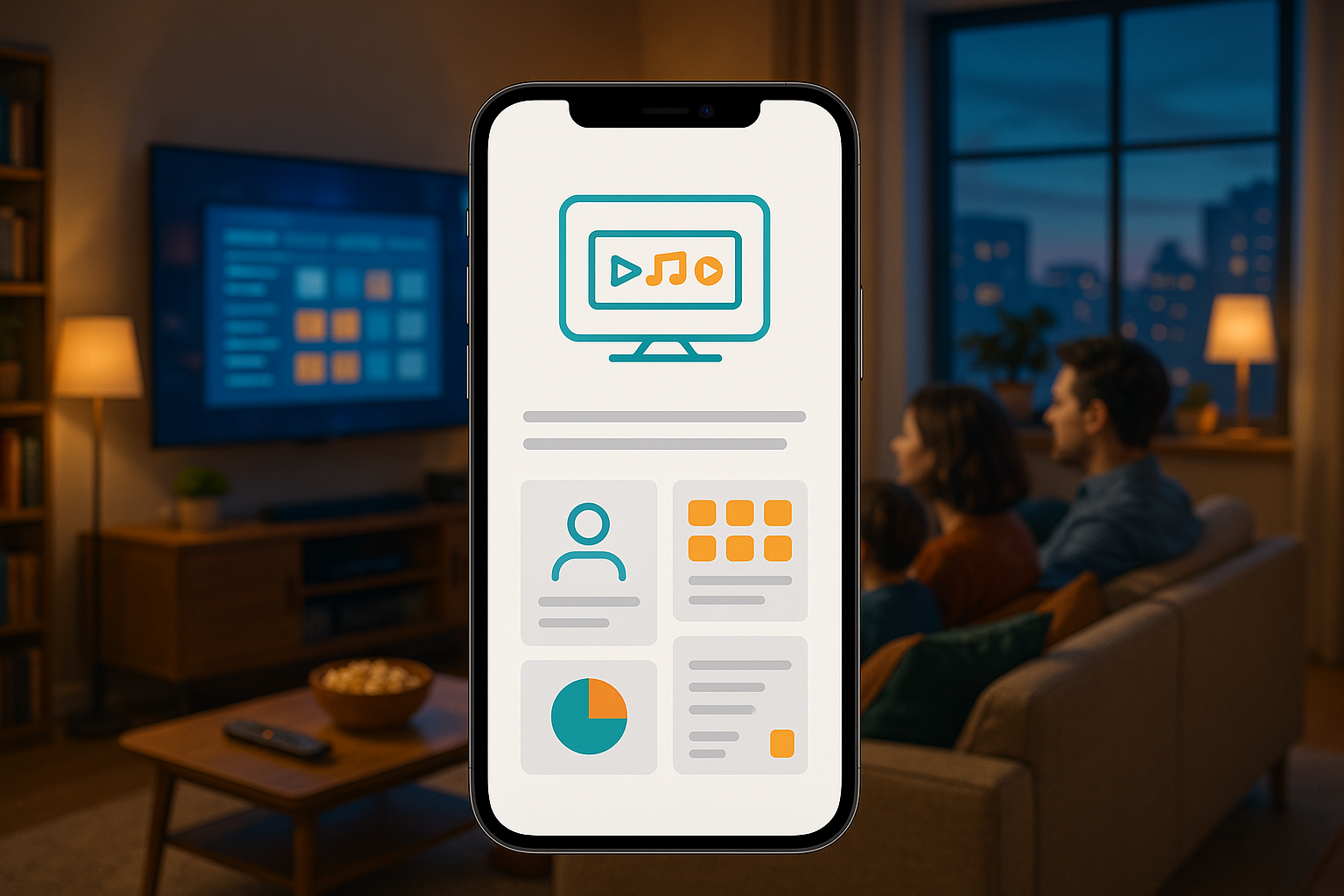
At its core, a TV app is a software application designed specifically to run on Smart TVs or connected streaming devices like set-top boxes (STBs), Apple TV, Amazon Fire TV, Google Chromecast, and Roku. Unlike mobile apps that are designed for touch interaction on small screens, TV apps are built for a passive, lean-back viewing experience controlled by a remote.
The primary purpose of most TV apps is to deliver content, most commonly video streaming. However, their functionality can extend to gaming, news aggregation, weather forecasts, fitness programs, and more. Because viewers are rarely tied to a single device, content distributors must ensure their apps function efficiently across this wide array of hardware. This requires a deep understanding of each platform’s unique Software Development Kits (SDKs), Application Programming Interfaces (APIs), and performance characteristics. The goal is to create a seamless and intuitive experience that makes it easy for users to find and enjoy the content they love from the comfort of their couch.
Reasons It Is Difficult to Develop a TV App In-House
Embarking on TV app development without a seasoned partner can be a monumental task. The ecosystem is fundamentally different from the more standardized worlds of iOS and Android mobile development. In-house teams often find themselves overwhelmed by a host of challenges that require specialized knowledge and significant resources to overcome.
The Fragmented Ecosystem
The single greatest challenge in Smart TV development is the severe fragmentation of the market. There is no single dominant operating system. Instead, a handful of major players compete for market share, each with its own hardware, software, and development rules.
- Multiple Operating Systems: Content distributors must build and maintain separate versions of their app for platforms like Samsung’s Tizen, LG’s webOS, Android TV, Roku OS, and Apple’s tvOS. Each of these systems has its own codebase, development tools, and performance quirks.
- Diverse Hardware: The app must function flawlessly not only on Smart TVs themselves but also on an array of external devices, including set-top boxes, Amazon Fire TV, Google Chromecast, and Roku sticks. Viewers switch between these devices, and they expect a consistent experience everywhere.
- Constantly Shifting SDKs and APIs: To make matters worse, vendors frequently update their SDKs and APIs. An update that brings new features to one platform might break functionality on another, requiring constant vigilance and maintenance from the development team. New operating systems and versions are also constantly entering the market, further complicating the landscape.
- Hardware Incompatibility: A particularly vexing issue is that new OS versions are not always compatible with older TV hardware. This means a new feature developed for the latest OS might not work on a TV that is only a few years old, forcing developers to manage different feature sets for different hardware generations or risk alienating a portion of their user base.
Unique UI/UX Challenges for the “10-Foot Experience”
Designing for a television is a completely different discipline than designing for a phone or a computer. The user is typically sitting 3-4 meters (about 10 feet) away from the screen, interacting with a remote control, not a touchscreen or a mouse. This “10-foot experience” has profound implications for every aspect of the user interface (UI) and user experience (UX).
- Visual Design and Legibility: Developers must become experts in the nuances of CSS style libraries to ensure smooth and legible viewing from a distance. Fonts must be large enough, with proper line spacing and weight, to be read comfortably without causing visual fatigue.
- Screen Characteristics: TV screens are not just bigger; they have different properties. They often have higher contrast and can suffer from issues like backlight bleeding and motion blur. Design elements that look great on a high-end computer monitor may appear jarring or unreadable on a TV.
- Resolution Scalability: The app’s layout must be robust enough to scale seamlessly across a wide range of screen resolutions, from older HD screens to Full HD, 4K, and now 8K. Without careful planning, layout shifts and broken interfaces can ruin the user experience on certain devices.
Rethinking Navigation for the Remote Control
The simple act of moving through an app is fundamentally different on a TV. Users don’t tap, swipe, or pinch-to-zoom. They rely on the directional pad (D-pad) of a remote control. This constraint requires a complete rethinking of navigation.
- Frictionless Flow: Ensuring frictionless navigation is a top priority. This usually means avoiding complex UI elements like drop-down menus, which are cumbersome to operate with a D-pad. Instead, the focus should be on simple lists, clear grids, and smooth transitions between pages. An intuitive and easily accessible back button is also a must-have.
- Intuitive Structure: The entire app’s navigation should be structured so that a first-time user can intuitively understand how to move around. There’s no room for ambiguity when the only input method is up, down, left, and right.
- The Focus Indicator: Because users aren’t tapping directly on an element, they need a clear visual cue to know which item is currently selected. Designing a clear and visually distinct focus indicator that doesn’t blend in with surrounding elements is absolutely essential for usability. A poorly designed focus state can make an app feel confusing and frustrating to use.
Hardware Performance and Memory Limitations
Unlike modern smartphones or PCs, which are packed with powerful processors and abundant RAM, many Smart TVs are low-memory devices with significant CPU limitations. This is especially true for older models, which many users still own.
- Memory Management: TVs are prone to memory errors, including uninitialized memory and improper allocation or deallocation. Developers must be meticulous about memory management to prevent crashes and performance degradation.
- Performance Bottlenecks: An app that runs smoothly on a high-end development machine may stutter or freeze on an actual TV due to CPU limitations. Advanced graphical elements, like those using Canvas, are often not applicable for older TVs as they can severely reduce performance and rendering speed.
- Functionality Management: When handling multiple platform versions, it’s key to timely switch off functionality that isn’t supported on older versions. Pushing a feature that the hardware can’t handle will only lead to a poor user experience.
Complexities of Streaming and DRM
For video streaming apps, the technical challenges multiply. Ensuring smooth, secure playback across all devices is a major hurdle.
- Streaming Protocol Compatibility: The app must be compatible with modern streaming techniques like MPEG-DASH and HLS. While modern Samsung (Tizen) and LG (webOS) TVs support these, older models may have limitations, requiring fallback solutions.
- DRM Integration: Digital Rights Management (DRM) systems like PlayReady and Widevine are crucial for protecting content. Ensuring compatibility with the correct DRM systems for each platform is a complex task. DRM incompatibility is a common cause of playback issues.
- Specific Version Quirks: Developers must be aware of highly specific compatibility issues. For instance, webOS TV 5.0 and higher support HTTP/2 but not HTTP/3. In another example, Widevine Classic was deprecated starting from webOS TV 23. Missing these details can lead to failed playback and frustrated users.
The Gauntlet of Testing and App Store Approval
After navigating all the development challenges, the app must still pass a rigorous and often lengthy testing and approval process.
- Intensive Testing: Due to device fragmentation, testing a Smart TV app is a massive undertaking. It requires a large volume of work on a wide range of physical devices, as screenshot testing is not an effective method for TV UIs.
- Unstable Debugging: The testing process itself can be difficult. Debug connections on TV devices are often unstable and can be lost under high loads, making it hard to diagnose and fix bugs.
- Long Approval Times: Submitting an app to a TV app store is not a quick process. Approval can take a long time, sometimes 2-3 months, depending on the platform and the app version.
- High Risk of Rejection: App store reviewers are strict. An app can be rejected for a wide range of reasons, including poor video streaming speed or failing to follow every detail of the submission guidelines. Frequently, developers miss must-have points during submission, leading to rejections and further delays.
Why Custom App Development for TV?
Given the multitude of challenges, it becomes clear that a one-size-fits-all, template-based solution is rarely sufficient for creating a successful TV app. A custom development approach is essential for businesses that want to deliver a high-quality, branded experience that can navigate the technical complexities of the TV ecosystem.
Custom development allows you to build an application tailored precisely to your content, your brand, and your audience. You gain full control over the user experience, ensuring the navigation is intuitive and the interface is optimized for the 10-foot view. This is crucial for creating an app that feels premium and is enjoyable to use.
Furthermore, a custom approach enables the integration of unique and advanced features that can set you apart from the competition. This could include personalized content recommendations powered by AI, interactive features, or sophisticated monetization models. With a custom build, you have the flexibility to choose a tech stack that is scalable and secure, ensuring your app can grow with your audience and adapt to the ever-changing TV landscape. It empowers you to tackle the challenges of fragmentation, performance, and DRM head-on, rather than being constrained by the limitations of an off-the-shelf platform.
Cost Estimate for Developing a TV App
Developing a custom TV app is a significant investment, reflecting the complexity of the work involved. While costs can vary widely based on the scope of the project, a useful benchmark is the cost to develop a video streaming app with functionality comparable to a service like Netflix.
Based on industry analysis, a project of this scale would typically range from $100,000 to $400,000+.
Several key factors will influence where your project falls within this range:
- Number of Platforms: Supporting more operating systems (Tizen, webOS, Android TV, etc.) will increase the cost, as each requires dedicated development and testing.
- Feature Complexity: A simple content delivery app will cost less than one with advanced features like AI-driven recommendations, user profiles, offline downloads, or interactive elements.
- UI/UX Design: A highly polished, custom-designed interface will require more investment than a basic, functional design.
- Backend Infrastructure: The cost of building or integrating with a robust backend to manage content, users, and subscriptions is a significant part of the overall budget.
- Third-Party Integrations: Integrating with analytics platforms, ad networks, or payment gateways adds to the complexity and cost.
This investment is not just for the initial build. You must also budget for ongoing maintenance, updates to support new OS versions and devices, and potential feature enhancements.
Top TV App Development Companies
Choosing the right development partner is the most critical decision you will make. You need a team with a proven track record of tackling complex technical challenges and a deep understanding of what it takes to launch and grow a successful application.
1. metacto
At metacto, we specialize in turning ambitious ideas into real-world success. While we are known as mobile app development experts with over 100 app launches under our belt, our core expertise lies in solving the very challenges that plague TV app development: creating fast, secure, and high-performing applications for complex ecosystems. Our experience building sophisticated apps with video streaming, AI, and robust monetization strategies makes us the ideal partner to bring your TV app vision to life.
Here’s how our experience directly addresses the core challenges of TV app development:
- Mastering Video Streaming: We have direct experience transforming digital content libraries into successful video streaming apps. For our client Mamazen, we built a mobile app that turned their meditation content into a video streaming platform, generating over $500k in annual subscriptions. We know how to build the infrastructure required to deliver a smooth and reliable viewing experience.
- Implementing Advanced Features: TV apps can be so much more than just a content portal. Our AI Development services can bring cutting-edge technology to your TV app. We’ve implemented computer vision AI for G-Sight and real-time P2P video with AI transcription and corrections for Parrot Club. Imagine a TV fitness app that uses computer vision to analyze a user’s form or a news app with AI-powered summaries. We can build it.
- Driving Growth and Monetization: A great app is only the beginning. Our expertise in App Growth and Monetization helps turn your application into a thriving business. We have a proven track record of converting users to paid subscriptions, helping clients like G-Sight and Parrot Club convert 10% of their customers to annual plans. We can help you implement a scalable subscription revenue model that turns viewers into lifelong fans.
- Navigating Complexity: Our US-based product strategists understand the market and the unique challenges of launching a new product. We’ve helped startups and established companies alike navigate complex development processes. If you have an existing project that has run into trouble, our Project Rescue services can turn frustrating technical setbacks into a clear path forward.
There is no idea too challenging for us. We are prepared to deliver whatever you envision, helping you go from a big idea to a successful launch and driving growth long after.
Conclusion: Build Your TV App the Right Way
The journey of creating a custom TV app is undeniably complex. The market is defined by a fragmented landscape of operating systems and devices, each with its own technical requirements. Success demands a deep understanding of the unique UI/UX principles of the 10-foot experience, meticulous performance optimization for low-memory hardware, and a robust strategy for handling streaming protocols and DRM. Furthermore, the lengthy and strict app store approval processes can easily derail a project that isn’t prepared.
As we’ve explored, these challenges make it incredibly difficult for most companies to develop a high-quality TV app in-house. The path to success lies in partnering with an expert development agency that has a proven history of building complex, high-performing applications.
We at metacto bring over 20 years of experience and more than 100 successful app launches to the table. Our expertise in building sophisticated mobile apps—particularly those involving video streaming, AI integration, and scalable monetization—provides the perfect foundation for tackling the world of TV app development. We help our clients build their app the right way, from day one. We help you start strong, build smart, and scale fast.
If you’re ready to bring your content to the biggest screen in the house, don’t go it alone. Let’s build something amazing together.
Talk with a TV app development expert at metacto today to discuss your vision.