Introduction
The convenience of on-demand delivery has fundamentally reshaped consumer expectations. From meals and groceries to packages and services, users now expect to get what they want, when they want it, with just a few taps on their smartphone. While this creates immense opportunities for entrepreneurs, the path to launching a successful on-demand multi-delivery app is fraught with complexity. In-house development teams often grapple with intricate logistics, inconsistent pricing models, stringent regulatory hurdles, and the immense pressure of creating a seamless user experience across countless devices. These challenges can quickly drain resources, delay launches, and ultimately hinder a promising idea from reaching its full potential.
This comprehensive guide will navigate the landscape of custom on-demand multi-delivery app development. We will explore what these applications entail, dissect the formidable challenges that make in-house development so difficult, and explain why a custom approach is superior to off-the-shelf solutions. We will also break down the different types of on-demand apps, provide a realistic cost estimate for development, and identify top development partners who can turn your vision into a market-leading reality.
Among these partners, we at metacto stand out. As a top US-based, AI-powered app development firm with over 100 successful app launches, we specialize in helping startups navigate these complex waters. We will show you how our expertise in mobile development, AI integration, and monetization can help you overcome the challenges and build a robust, scalable, and profitable on-demand multi-delivery platform.
What is an On-Demand Multi-Delivery App?
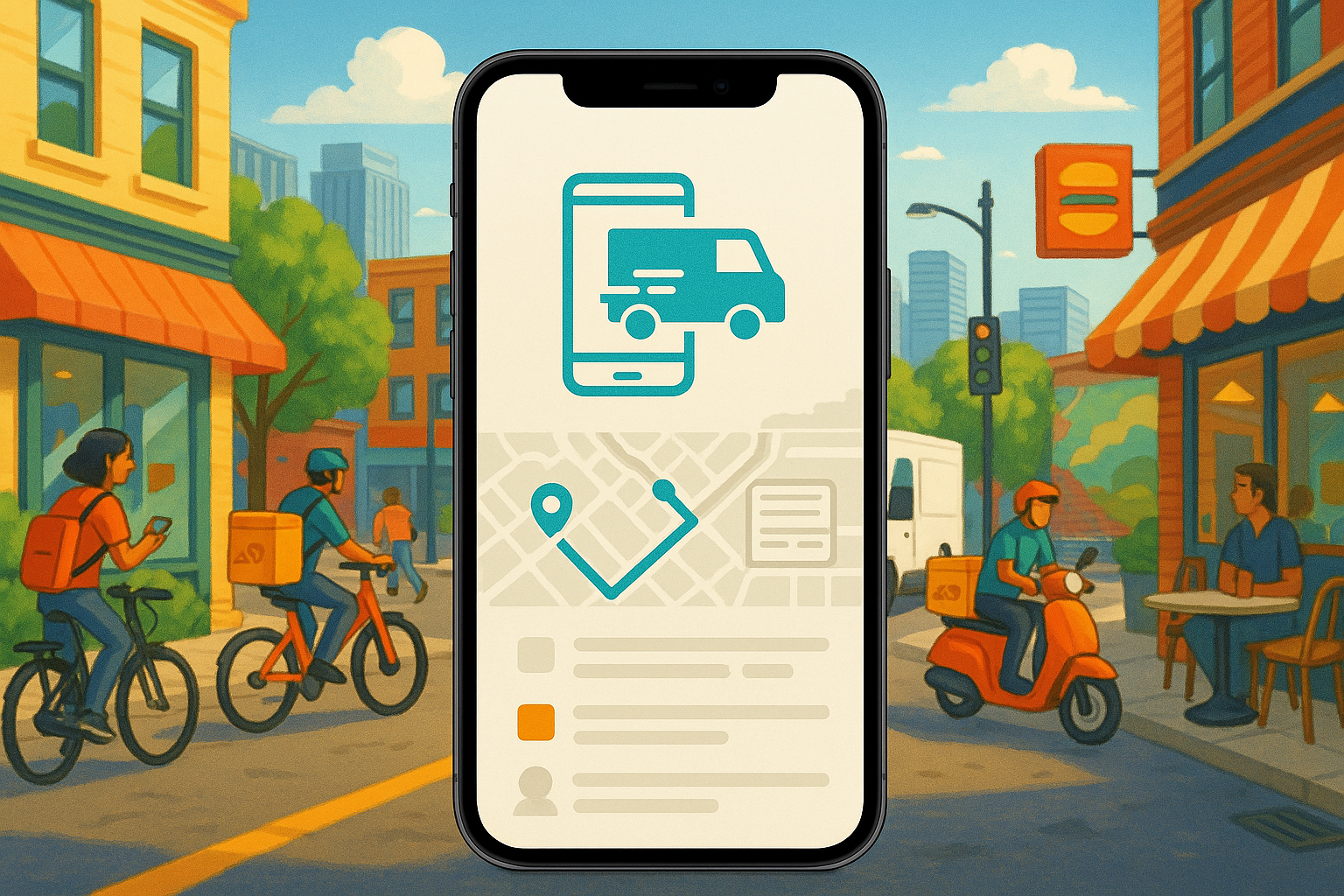
At its core, an on-demand multi-delivery app is a digital platform that connects users with a wide range of goods and services for immediate or scheduled delivery. These applications function as a sophisticated intermediary, facilitating transactions between various businesses or individuals (the providers) and the end consumers. Unlike single-purpose apps, a “multi-delivery” platform is designed to handle different types of deliveries across multiple verticals, such as food from various restaurants, groceries from local stores, pharmaceuticals, or even peer-to-peer package delivery.
These apps typically consist of three interconnected components:
- The Customer App: The user-facing interface where customers can browse services, place orders, make payments, and track their delivery in real-time.
- The Courier App: A tool for delivery drivers or service providers to accept jobs, navigate to pickup and drop-off locations, and manage their earnings.
- The Admin Panel: A centralized dashboard for the business to manage operations, oversee restaurants or partner stores, monitor deliveries, handle customer support, and analyze performance data.
The primary value proposition of these apps is convenience. By aggregating multiple services into a single, user-friendly interface and providing features like real-time tracking and secure one-click payments, they solve the logistical puzzle of modern commerce, making life easier for both consumers and businesses.
Reasons That it is Difficult to Develop an On-Demand Multi-Delivery App In-House
While the concept seems straightforward, the execution is incredibly challenging. Attempting to build a sophisticated multi-delivery app in-house often exposes teams to a host of obstacles that require deep, specialized expertise to overcome.
Inconsistent Pricing and High Operational Costs
One of the most significant hurdles is establishing a consistent and transparent pricing strategy. Delivery fees fluctuate, and implementing surge pricing during peak hours can lead to customer confusion and mistrust. If the final cost at checkout is significantly higher than what a customer initially expected, it can lead directly to cart abandonment. These inconsistencies can erode user trust and push customers toward competitors with more predictable pricing. Furthermore, high operational costs, driven by inefficient processes or outdated technology, can inflate labor costs and threaten the long-term sustainability of the business. Without careful management, these mounting expenses can stifle innovation, discourage investors, and hinder the company’s ability to scale.
Inefficient Order Fulfillment and Logistics
The logistics of on-demand delivery are a complex dance of timing, communication, and navigation. Inefficient order fulfillment is a common point of failure. Delayed orders frustrate customers and management alike, often stemming from a lack of real-time tracking or frequent miscommunication between restaurants, stores, and delivery drivers. Inefficient route planning can compound the problem, causing drivers to arrive at wrong locations, resulting in cancelled orders and unhappy customers. Each of these failures can seriously harm the brand’s reputation.
Data Security and Privacy
On-demand apps process vast amounts of sensitive information, including customer addresses, payment details, and vendor data. Safeguarding this data is a critical and non-negotiable challenge. The threat of cyberattacks and data breaches is constant, and any vulnerability can be exploited by malicious actors. Failure to comply with data protection regulations like GDPR or CCPA can result in substantial financial penalties, devastating reputational damage, and a complete loss of customer trust. Building a secure system requires robust data protection measures from the ground up.
Regulatory Compliance and Food Safety
Navigating the web of regulations is another major challenge, especially for apps handling food or groceries. Different regions have varying laws concerning food handling, sanitation, and delivery standards, which complicates operations. Maintaining high safety standards across the entire supply chain—from a restaurant kitchen to the customer’s doorstep—is crucial but difficult, especially when working with third-party vendors or gig workers. Non-compliance can lead to fines, lawsuits, and irreversible damage to the brand.
Maintaining a High-Quality User Experience (UX)
A uniform and high-quality user experience is essential for retention, but it’s incredibly difficult to maintain across a fragmented ecosystem of devices, operating systems, and network conditions. Variations in screen sizes, performance issues like slow loading times, and inconsistent design elements lead to user frustration and reduce engagement. In today’s competitive market, even minor glitches or a slow interface can be enough to drive a user away for good, severely impacting retention and brand perception.
Marketing and Customer Acquisition
The on-demand delivery market is incredibly saturated. Identifying the right competitive niche and selecting the most effective advertising methods to reach a target audience is a significant challenge. With countless platforms, ad types, and strategies available, companies struggle to determine which will deliver the highest return on investment. A poorly executed advertising strategy can quickly waste marketing budgets and result in low customer acquisition, while ineffective targeting may fail to convert potential users into loyal customers.
Why Custom App Development for On-Demand Multi-Delivery
Given these challenges, opting for a custom-developed application over a generic, off-the-shelf solution is not just a preference—it’s a strategic necessity. A custom build allows you to create a platform tailored precisely to your business model, target market, and operational needs.
A custom approach empowers you to:
- Solve Unique Logistical Problems: Custom development allows for the creation of proprietary algorithms for route optimization, dynamic pricing, and driver dispatching, directly addressing the core challenge of inefficient logistics.
- Build a Standout User Experience: You can design a unique, intuitive, and high-performing UI/UX that sets your brand apart in a crowded marketplace. This helps in overcoming issues related to inconsistent design and user frustration.
- Ensure Scalability and Security: A custom app can be built on a robust, scalable architecture designed to grow with your business and incorporate advanced security protocols to protect sensitive user data from day one.
- Integrate Advanced Features: Custom development opens the door to integrating cutting-edge technologies like AI-powered recommendations, real-time analytics, and gamification to keep users engaged.
Partnering with an expert app development agency ensures these benefits are realized effectively. The case of KFC demonstrates the power of professional development. By working with an agency, KFC’s mobile app saw a 22% increase in conversion rates, a 60% increase in repeat purchases, and achieved an average 4.5 rating on both the Play Store and App Store. This partnership streamlined their delivery process and delivered a significant return on investment, proving that proper app development services directly correlate with client engagement and operational efficiency.
Different Types of On-Demand Multi-Delivery Apps
On-demand applications can be categorized in several ways, based on the participants involved and the operational model. Understanding these distinctions is crucial for defining your business strategy.
Based on Participants
- Enterprise to Person (E2P) / Business to Consumer (B2C): These are the most common types of delivery apps. They facilitate transactions of goods or services directly between a business (like a restaurant or grocery store) and individual customers.
- Enterprise to Enterprise (E2E) / Business to Business (B2B): These mobile solutions are created to connect businesses with each other. For example, a B2B app might connect a restaurant with its wholesale food suppliers for on-demand ingredient delivery. These apps can be vertical, serving a single industry, or horizontal, serving multiple sectors.
- Person to Person (P2P) / Consumer to Consumer (C2C): These platforms enable users to exchange products or services directly with one another. In this model, all users have equal rights and are not typically formal entrepreneurs. These apps are gaining popularity because they often offer cost savings.
Based on Food Delivery Models
Within the popular food delivery vertical, on-demand apps fall into three main categories:
- Aggregators: These apps act as mediators, connecting customers with a wide array of local restaurants. They provide a user-friendly interface for browsing menus, placing orders, and making payments, but the restaurant handles the actual delivery.
- New Delivery Players: These platforms provide logistics support for restaurants that do not have their own delivery fleet. They offer the same aggregator functionalities (menus, payments, tracking) but also manage the entire delivery process, picking up the food from the restaurant and delivering it to the customer.
- Full-Stack Food Delivery Apps: These companies control the entire value chain, from preparing the food in their own kitchens (often called “cloud kitchens”) to managing the delivery logistics. This model offers maximum control over quality and efficiency.
Cost Estimate for Developing an On-Demand Multi-Delivery App
The cost of developing a custom on-demand delivery app is a significant investment, but it is one that is necessary for building a sustainable business. The total cost to develop a delivery app platform similar to UberEats generally ranges from $70,000 to $150,000.
This estimate is typically based on a total development time of 2,800 to 3,000 hours at an average hourly rate of $50. The project involves building several distinct components, each with its own timeline and cost.
Here is a typical breakdown:
| Component | Development Time (Hours) | Starting Cost | Estimated Timeline |
|---|---|---|---|
| Customer App | 700 - 900 hours | $35,000 | ~3.5 months |
| Courier App | 700 - 900 hours | $35,000 | ~3.5 months |
| Merchant App | 700 - 900 hours | $35,000 | ~3.5 months |
| Admin Panel | 400 - 500 hours | $10,000 | ~8 weeks |
To manage costs, especially during the initial phase, startups can consider proceeding with a ready-to-use solution for the Admin Panel for their Minimum Viable Product (MVP). It’s also worth noting that while these costs are substantial, building an app like this used to be even more expensive and time-consuming.
Top On-Demand Multi-Delivery App Development Companies
Choosing the right development partner is the most critical decision you will make. Here are some of the top companies in the space, with a detailed look at why we at metacto are the ideal partner for your project.
1. metacto
As a US-based firm with over 100 successful app launches, we specialize in helping startups transform big ideas into real-world success. We are mobile app experts who understand not only the technology but also the unique market challenges that startups face. Our US-based product strategists lead every project, ensuring your app is built the right way from day one.
We don’t just build apps; we solve the core business challenges that prevent on-demand platforms from succeeding.
-
Overcoming Complexity and High Costs: Our Mobile App Development services are designed to bring your app to market without the hassle of complex development processes. For startups conscious of initial investment, our Rapid MVP Development services allow you to build, test, and validate your concept quickly, without overspending.
-
Solving Logistical and Operational Inefficiencies: We leverage advanced technology to streamline operations. Our AI Development services bring AI into your business to make every process faster, better, and smarter. For example, we helped G-Sight implement cutting-edge computer vision AI technology, a solution that can be adapted for route optimization and logistics management in a delivery app.
-
Driving Growth and Profitability: Building the app is only the beginning. Our App Growth services help you get more downloads and convert more users, while our Monetization services turn your mobile app into a real business. We have a proven track record:
- We helped Mamazen generate over $500k in annual subscriptions by creating a scalable subscription revenue model.
- We helped both G-Sight and Parrot Club convert 10% of their customers to annual subscriptions, turning one-time users into recurring revenue streams.
- We also helped G-Sight keep users coming back with gamification, a powerful tool for retention in the competitive delivery space.
-
Building Robust, Feature-Rich Platforms: Our expertise is broad and deep. We launched a 2-sided marketplace with discoverability for Parrot Club, an app that also supports 7 languages in 8 countries. This experience is directly applicable to building a multi-vendor delivery marketplace that can scale internationally.
We build fast, secure, and high-performing mobile apps that stand out. No idea is too challenging for our team. We provide more than just development; we drive growth long after launch, ensuring your app attracts users, drives engagement, and generates revenue.
Conclusion
Developing a custom on-demand multi-delivery app is a complex but rewarding endeavor. The journey is filled with challenges, from navigating intricate logistics and ensuring regulatory compliance to managing high operational costs and standing out in a saturated market. As we’ve explored, success hinges on a deep understanding of the different app models, a realistic grasp of the development costs, and, most importantly, choosing a development partner with the expertise to guide you through the process.
A custom-built application is the key to creating a platform that is secure, scalable, and provides a unique user experience. An experienced development agency does more than just write code; they act as a strategic partner, helping you overcome obstacles and build a sustainable business.
We at metacto have the experience and a proven track record of launching over 100 successful apps. We specialize in helping startups build smart and scale fast. If you are ready to turn your vision for an on-demand multi-delivery platform into a market-leading reality, we are here to help.
Talk with an On-Demand Multi-Delivery app development expert at metacto today.