Introduction
The wellness app market is not just growing; it’s exploding. Predicted to hit $6.86 billion by the end of 2024 and projected to reach $10.04 billion by 2028, the opportunity for innovation and impact is immense. However, entering this lucrative space is fraught with challenges. The path to launching a successful wellness app is littered with technical minefields, unforgiving user expectations, and the monumental task of building lasting habits. From ensuring flawless real-time data synchronization across a user’s devices to designing an interface that feels intuitive mid-workout, the hurdles can quickly overwhelm even the most prepared in-house teams.
Users in this space are uniquely demanding. A missed step count or a clunky interface isn’t a minor inconvenience; it’s a reason to delete the app and never look back. With the average 30-day retention rate for digital health apps hovering at a mere 4%, the real challenge isn’t just launching—it’s creating an experience so seamless, personal, and effective that it becomes an indispensable part of a user’s daily life. This requires a deep understanding of not only technology but also human psychology and behavior.
This guide will provide a comprehensive overview of what it takes to build a custom wellness app that stands out and succeeds. We will explore the significant difficulties of in-house development, the compelling reasons for choosing a custom approach, the different types of wellness apps you can build, and a detailed breakdown of development costs. We will also highlight why partnering with a specialized development agency is often the most effective path to success.
As a top US AI-powered app development firm with over 20 years of experience and more than 100 apps launched, we at metacto have navigated these complexities firsthand. We helped Mamazen, the #1 mindfulness app for parents, transform their digital content into a scalable video streaming platform that generated over $500k in annual subscriptions. This article distills our expertise to help you understand the landscape and make informed decisions for your wellness app venture.
What is a Wellness App?
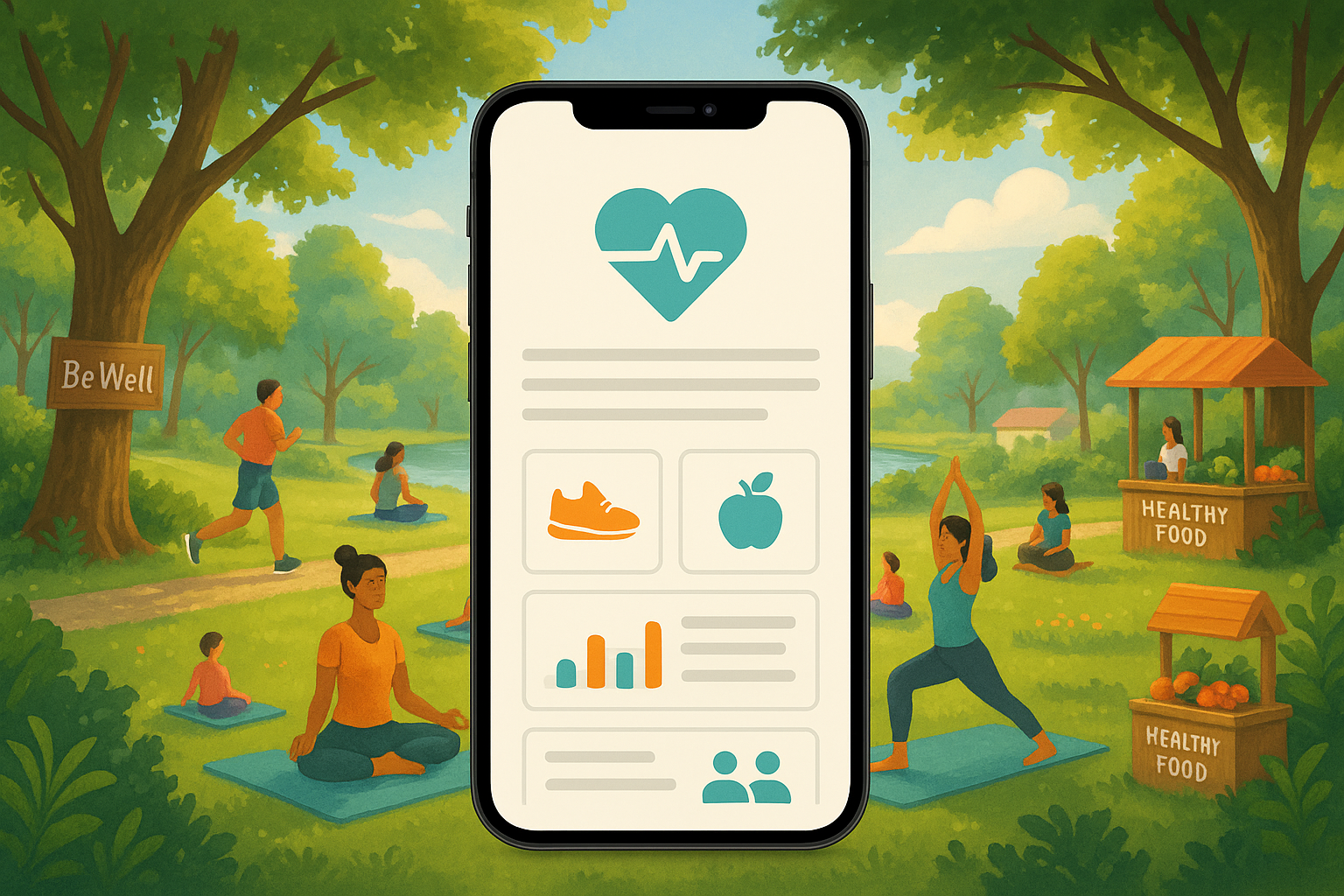
A wellness app is a software application designed for mobile devices to help users track, manage, and improve their physical and mental well-being. These apps serve as digital companions on a user’s health journey, providing tools, resources, and motivation to achieve specific goals. Unlike generic applications, wellness apps are deeply personal and are often integrated into a user’s daily routines and habits.
The scope of a wellness app can be broad, covering various aspects of health. Common functionalities include:
- Activity Tracking: Monitoring physical activities like steps taken, distance covered, and workouts completed.
- Nutritional Logging: Counting calories, tracking macronutrients, and logging meals to maintain a healthy diet.
- Workout Guidance: Providing structured workout plans, exercise tutorials, and real-time coaching.
- Mindfulness and Meditation: Offering guided sessions to reduce stress, improve focus, and enhance mental clarity, as we helped implement with Mamazen.
- Sleep Analysis: Tracking sleep patterns and providing insights to improve sleep quality.
At its core, a successful wellness app does more than just present data; it fosters engagement and supports habit formation. A calorie counter is only useful if it helps a user achieve results, and a workout plan must be adaptable to a user’s fluctuating motivation. The ultimate goal is to create an experience that feels relevant, supportive, and emotionally resonant, turning a transactional tool into a trusted partner in health.
Reasons that it is difficult to develop a Wellness app in house
Building a wellness app in-house might seem like a way to maintain control and reduce costs, but the reality is often the opposite. The unique demands of this app category present a formidable set of challenges that can strain internal resources, delay launches, and ultimately lead to product failure.
The Technical Minefield of Real-Time Data Syncing
Users expect their data—whether from a smartwatch, phone, or tablet—to be instantly and flawlessly updated across all devices. They will notice a missing step count or an incorrect calorie log, and they won’t be forgiving.
- Complex Technology Stack: Developers must contend with multiple operating systems (iOS, Android, watchOS), various wireless protocols (Bluetooth, Wi-Fi), countless hardware quirks, and flaky network connections.
- Reliability is Non-Negotiable: Syncing is a feature that remains invisible until it breaks. When it fails, it becomes a critical problem for the user. A health tracking app that doesn’t show today’s progress might as well be completely broken.
- Fault-Tolerant Systems: The required infrastructure must be consistent and fault-tolerant, providing a syncing experience that users never have to think or worry about. Achieving this level of reliability requires specialized expertise that many in-house teams lack.
The Unforgiving Nature of User Experience (UX)
Wellness apps simply do not get second chances if their interface is confusing, clunky, or slow. A bad user experience is the fastest way to kill engagement and drive users away.
- Use in Active Environments: People use these apps while on the move—sweating, running, and breathing hard. This is not the time to decipher a complicated menu or wait for a laggy animation to load.
- Instant and Obvious Interactions: Every click, swipe, and tap needs to feel instant and obvious. Apps cluttered with tiny buttons, endless settings, and hard-to-read fonts are quickly deleted.
- Design as the First and Last Impression: In the competitive wellness market, design is often the primary differentiator. It’s the first thing a user sees and the lasting impression they are left with.
The Herculean Task of User Retention
Getting a user to download your app is only the beginning. The real challenge is keeping them.
- Extremely Low Retention Rates: The average 30-day retention rate for digital health apps is a staggering 4%. Downloads are a vanity metric if users stop showing up.
- Habit Formation is Key: Wellness apps are fundamentally tied to habits, which are notoriously hard to build and easy to break. If an app doesn’t actively support habit formation, it won’t last on a user’s phone.
- Beyond Features to Emotional Connection: Most apps focus too much on features and not enough on why people stay. A calorie counter or a workout plan is useless if it doesn’t provide results, adapt to the user’s motivation, or create an emotional pull. An app that feels cold and transactional will be abandoned when the user’s motivation dips.
The Challenge of Scalability and Backend Infrastructure
If your app is successful, a much bigger problem emerges: scaling.
- Real-Time Demands: A wellness app’s infrastructure must handle thousands, or even millions, of users logging workouts, syncing wearables, and tracking progress simultaneously and in real time.
- Heavy-Duty Backend: These are not lightweight applications. They handle sensitive personal data, real-time activity tracking, complex user flows, and numerous third-party integrations. The backend must remain fast, stable, and flexible under immense pressure.
- Hobby App vs. Successful Product: Whether your backend can keep up is what determines the difference between a hobby project and a market-leading product. Incorrect scaling is felt by both developers and users, leading to crashes, data loss, and user churn.
The Complexity of Third-Party Integrations
Wellness apps do not exist in a vacuum. Users expect them to connect effortlessly with their existing ecosystem of devices and services.
- Ecosystem is Everything: If your product can’t plug into Apple HealthKit, Google Fit, and popular wearables like Garmin and Fitbit, it will be replaced by one that can.
- Messy and Unpredictable APIs: Each device and platform has its own API, data format, and limitations. Apple HealthKit structures data differently than Google Fit. Fitbit has API rate limits. Garmin devices behave differently across platforms.
- Lack of Control: Developers cannot control device vendors. Partners frequently update their SDKs, sometimes without warning, which can break integrations and require immediate, unplanned development work. Done wrong, third-party integrations will drag a product down.
The Unpredictability of Real-World Usage
Testing in a controlled lab environment is nothing like how wellness apps are used in the wild.
- Harsh Environments: Users are running through city streets with spotty connections, lifting weights in basement gyms, or cycling in the rain. They are not sitting calmly on a stable Wi-Fi network with their phones plugged in.
- Edge-Case Bugs: Bugs that never appear during regular testing will immediately surface under real-world conditions like poor signal, a dying battery, lost GPS, or an interrupted workout.
- Loss of Trust: If an app crashes mid-run or loses a user’s hard-earned data, that user’s trust is gone, and it is incredibly difficult to win back.
The Trap of Scope Creep
It’s always tempting to add just one more feature. This temptation is one of the biggest project killers in app development.
- Bloat and Delays: Adding features can lead to a bloated app, an overwhelmed team, and a launch delayed by six months or more.
- More is Not Better: More features do not equal a better user experience. In fact, it often leads to a more confusing and less effective product.
- The MVP is a Strategy, Not a Compromise: Trying to build your full vision on day one is a trap. You will run out of time, budget, and patience long before you launch. A focused Minimum Viable Product (MVP) is the strategic way to enter the market, gather feedback, and iterate intelligently.
Why custom app development for Wellness
Given the formidable challenges of building a wellness app, partnering with a professional development company for a custom solution is not just an option; it’s a strategic necessity. A custom approach allows you to build a product tailored specifically to your vision and your users’ needs, while an experienced agency provides the expertise to navigate the technical and strategic hurdles that derail in-house projects.
Expertise and Specialization
Professional full-stack development companies offer a team of skilled developers with diverse expertise in the latest web and mobile technologies.
- They possess in-depth knowledge of programming languages and architecture, ensuring the creation of robust, secure, and high-performing applications that adhere to industry standards.
- Experts at these firms stay updated with emerging trends and advancements, continuously improving their skills to provide tailored solutions that give your business a competitive edge.
Streamlined Process and Project Management
Hiring a development company gives you access to a streamlined development process built on years of experience.
- Effective project management and planning ensure that your app is developed within agreed-upon timelines, with minimal downtime for your business operations. This disciplined approach is a direct counter to the problem of scope creep.
- An agency efficiently allocates resources, ensuring the project progresses smoothly and eliminating the unnecessary delays that plague inexperienced teams. Our Mobile App Development service, for example, is designed to take an idea to a market-ready app in just 90 days.
Seamless Integrations and Advanced Features
The messy world of third-party integrations becomes manageable with an experienced partner.
- Development companies excel in integrating advanced features and providing seamless third-party integration, allowing your app to collaborate effectively with other systems in the user’s ecosystem.
- They prioritize robust security measures to protect sensitive user data, a critical requirement for any health-related application.
Superior User Experience and Design
A professional agency brings a user-centric approach to development, which is paramount in the wellness space.
- They specialize in creating unique, attractive, and intuitive user interfaces that enhance the overall user experience, making the app both appealing and efficient.
- Experts create user-friendly interfaces that boost engagement, making it easier for customers to navigate the app. They can also implement personalization options that allow users to customize their experience, increasing both engagement and customer satisfaction.
Cost-Effectiveness and Scalability
While it may seem counterintuitive, hiring a professional agency can lead to significant cost savings.
- Outsourcing development eliminates the need to recruit, train, and retain an expensive in-house team, along with the associated costs of salaries, benefits, and infrastructure.
- You gain access to advanced development tools and software that would otherwise require significant investment.
- Most importantly, agencies create customized and scalable solutions from day one, ensuring your application can grow with your business and handle success without costly re-architecting.
Different types of Wellness apps
The wellness app market is diverse, with several distinct categories catering to different user needs. Understanding these types can help you focus your vision and identify your niche.
Activity Tracking Apps
These apps are the digital equivalent of a pedometer, but with far more functionality. They serve as a central hub for a user’s daily health data.
- Core Features: Tracking steps, calories burned, distance traveled, and active minutes.
- Examples: MyFitnessPal, which combines activity tracking with comprehensive food logging.
- Goal: To provide users with a clear, data-driven overview of their daily activity levels and nutritional intake, helping them make informed decisions.
Fitness & Workouts Apps
These applications act as a personal trainer in your pocket, offering structured guidance for physical exercise.
- Core Features: Pre-designed workout plans, video tutorials for exercises, live-streamed fitness classes, and progress tracking.
- Examples: Peloton, which has built a massive community around its live and on-demand workout classes.
- Goal: To make fitness accessible and engaging, providing users with the motivation and instruction they need to achieve their fitness goals, whether at home or in the gym.
Health & Wellness Platforms
This is a broader category that often combines elements from other types of apps to offer a holistic approach to well-being.
- Core Features: These platforms may include workout plans, meal plans, meditation guides, sleep tracking, and educational content all in one place.
- Examples: BetterMe, which provides personalized workout and nutrition plans tailored to the user’s goals.
- Goal: To be an all-in-one solution for users looking to improve multiple facets of their health, from physical fitness to mental clarity. Our work with Mamazen, a mindfulness app for parents, falls into this category by focusing deeply on mental and emotional wellness.
Cost estimate for developing a Wellness app
The cost of developing a wellness app can vary widely, but a typical range is between $50,000 and $150,000. This figure depends on several key factors, including the app’s complexity, the chosen platform, and the development team’s location.
A strategic approach to managing costs is to start with a Minimum Viable Product (MVP). Many successful fitness companies started small, launching an MVP with just 2-3 key features to keep development costs minimal. With proper planning, user research, and the right technology stack, it is possible to launch an MVP for $50,000-$70,000.
Cost Breakdown by App Type
The type of app you build is a primary cost driver.
| App Type | Estimated Cost (MVP) | Estimated Cost (Full-Featured) |
|---|---|---|
| Activity Tracking App (e.g., MyFitnessPal) | $60,000 - $100,000 | N/A |
| Fitness & Workouts App (e.g., Peloton) | $100,000 - $150,000 | N/A |
| Health & Wellness Platform (e.g., BetterMe) | $100,000 - $150,000 | $250,000+ |
Cost Breakdown by Development Phase
The development process is typically broken down into several stages, each with its own associated costs. These estimates are based on an average rate of $50 per hour.
| Development Phase | Estimated Cost |
|---|---|
| Discovery | $15,000 - $25,000 |
| Design (Wireframes & UI/UX) | $5,000 - $10,000 |
| Development | $50,000+ |
| Testing | ~$6,000 |
Cost Breakdown by Features
The features you include will have the most significant impact on the final price. Basic features are relatively straightforward to build, while advanced features require hundreds of hours of complex development, testing, and integration work.
| Feature Type | Feature Example | Average Cost |
|---|---|---|
| Basic | User Registration | $3,000 |
| Basic | Social Sharing | $3,500 |
| Basic | Activity Tracking | $5,500 |
| Advanced | Wearable Device Integration | Pushes total cost above $150,000 |
| Advanced | AI Personalization | Pushes total cost to $200,000+ |
| Advanced | Gamification | Pushes total cost to $200,000+ |
| Advanced | Video Streaming | Pushes total cost to $200,000+ |
Cost Breakdown by Team Location
Where you hire your developers from dramatically affects the cost. Outsourcing to skilled developers in emerging economies can provide significant cost reduction without compromising on quality.
| Country/Region | Average Hourly Rate |
|---|---|
| United States | $100 - $150 |
| United Kingdom | $80 - $100 |
| Ukraine | $50 |
| China | $30 |
| India | $20 |
Engaging outsourced app developers is often more financially viable for startups. For example, hiring a US developer costs at least $100 per hour, while outsourcing to a highly skilled Ukrainian developer costs only $50 per hour.
Ongoing Maintenance Costs
Remember to budget for maintenance as long as the app is operational. Hiring an in-house support team means paying fixed salaries and benefits, even when the app is stable and requires few updates. Outsourcing to a software company offers more flexibility, allowing you to pay only for the time and resources you use.
Top Wellness app development companies
Choosing the right development partner is the most critical decision you will make. You need a team with proven experience, technical depth, and a strategic understanding of the wellness market.
1. metacto
At metacto, we position ourselves as the premier choice for custom wellness app development. As a US-based firm with over 20 years of experience launching more than 100 successful apps, we combine deep technical expertise with a strategic focus on user growth and monetization. Our 5.0-star rating on Clutch reflects our commitment to delivering results that exceed expectations.
Our success in the wellness space is best demonstrated by our partnership with Mamazen, the #1 Mindfulness App for parents. We helped them achieve incredible results:
- Transformed Content into Revenue: We turned their existing digital content library into a sophisticated video streaming mobile app.
- Built Scalable Monetization: We helped create a scalable subscription revenue model that turned customers into lifelong fans.
- Generated Significant Growth: With our support, Mamazen generated over $500k in annual subscriptions.
- Achieved High Retention: Our work on personalized meditation journeys led to an 85% monthly retention rate.
- Engineered for Scale: We built an infrastructure capable of handling over 100,000 concurrent video streams with latency under 200ms.
We understand the unique challenges of the wellness industry, from building habit-forming user experiences to implementing complex AI for personalization. Our services are designed to address every stage of the app lifecycle, including AI Development, App Growth, and App Monetization. Our 90-day MVP service is the fastest way to get your product from idea to market, allowing you to test your concept and gather user feedback without a massive upfront investment.
Conclusion
The journey to launching a successful wellness app is both exciting and demanding. The market is ripe with opportunity, but it is also defined by intense competition, high user expectations, and a complex technical landscape. As we’ve covered, the challenges are significant: ensuring flawless real-time data sync, creating an irresistible user experience, driving long-term retention, scaling infrastructure, and navigating a fragmented ecosystem of third-party devices.
Attempting to tackle these hurdles with an in-house team can quickly lead to budget overruns, missed deadlines, and a product that fails to gain traction. This is why a custom development approach with an experienced agency is the most reliable path to success. A professional partner brings not only the specialized technical skills to build a robust and scalable app but also the strategic insight to design an engaging, habit-forming experience that users will love. From managing costs with a focused MVP to building a full-featured platform, the right team makes all the difference.
At metacto, we have the experience and expertise to be that partner. We don’t just build apps; we build businesses. Our work with Mamazen is a testament to our ability to deliver tangible results in the competitive wellness market. If you are ready to turn your vision for a wellness app into a thriving reality, the next step is to talk with an expert who understands the journey ahead.
Talk with a Wellness app development expert at metacto today to discuss your project and learn how we can help you build, grow, and monetize your app the right way, from day one.