Introduction
The promise of the smart home—a seamlessly connected ecosystem where lighting, climate, entertainment, and security are all managed with a simple tap or voice command—has captured the imagination of consumers worldwide. At the heart of this revolution is the smart home app, the central nervous system that empowers users to control their environment. However, building such an app is far from simple. The development process is a minefield of technical challenges, from navigating a fragmented landscape of devices and protocols to implementing ironclad security measures that protect user privacy.
Many businesses and entrepreneurs with innovative ideas for the smart home space find themselves unprepared for the complexities involved. In-house development can quickly become a resource-draining endeavor, bogged down by compatibility issues, performance bottlenecks, and the ever-present threat of data breaches. This is where a strategic partnership with an expert development agency becomes not just a viable option, but a critical component of success.
This article serves as a comprehensive guide to custom smart home app development. We will explore what these apps are, dissect the significant challenges developers face, and explain why a custom approach is superior. We will also break down the different types of smart home apps, provide a detailed cost estimate, and introduce top development companies that can bring your vision to life. As a top US AI-powered app development firm, we at metacto have over two decades of experience turning complex ideas into market-ready applications. We understand the intricacies of this domain and are here to help you build a robust, scalable, and secure smart home solution.
What is a Smart Home App?
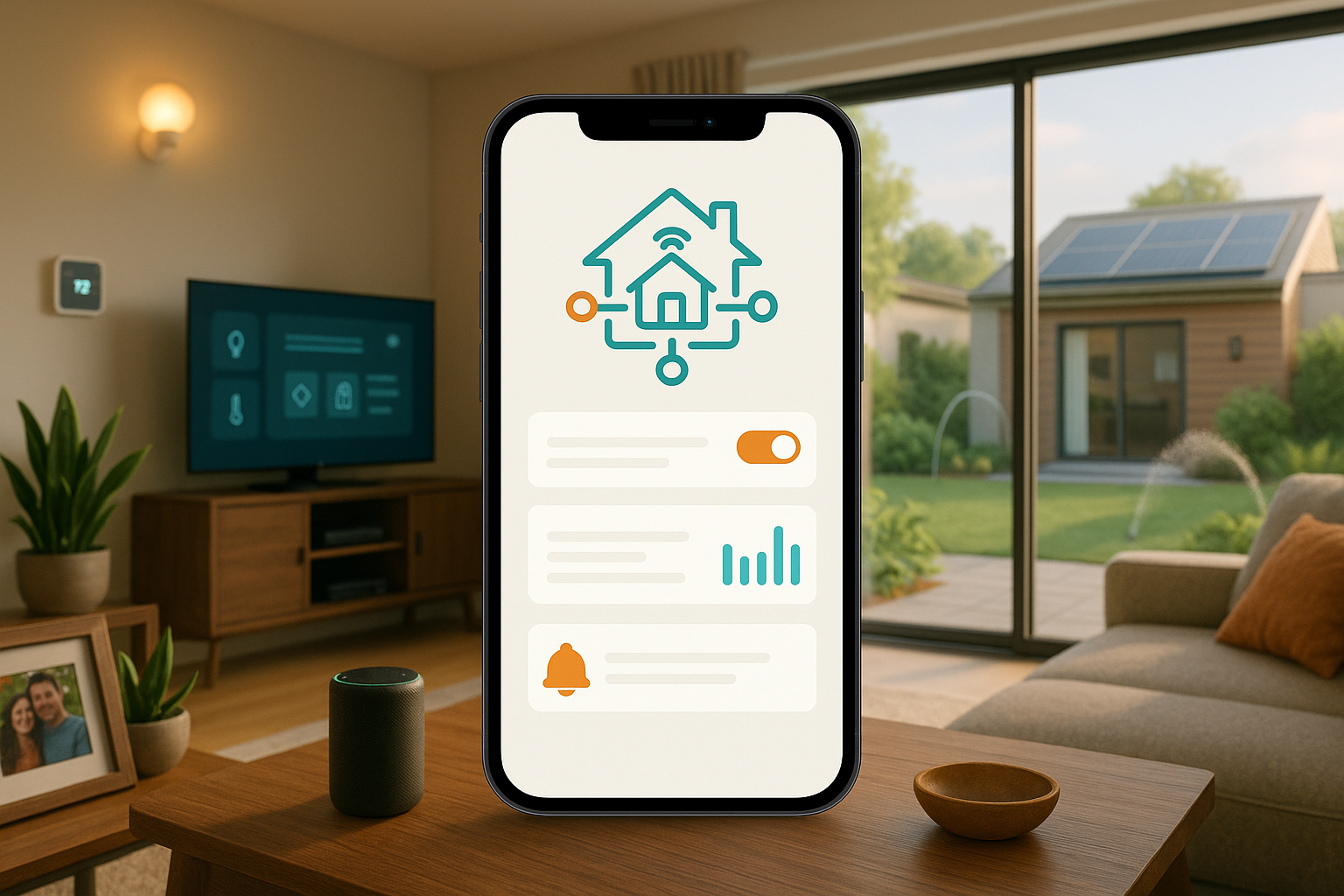
At its core, a smart home app is a mobile application that acts as a unified command center for a user’s entire ecosystem of connected devices. The best smart home apps provide a remarkable amount of control, allowing users to easily operate numerous smart devices, even if they come from different brands or serve vastly different functions. Instead of juggling a dozen separate apps for lights, thermostats, speakers, and cameras, the user interacts with a single, intuitive interface.
This centralization is the foundation for true home automation. Smart home apps enable users to move beyond simple remote control and set up sophisticated routines and schedules. For example, a user can create a “Good Morning” routine that simultaneously turns on the smart lights, adjusts the smart thermostat to a comfortable temperature, and activates a smart plug connected to the coffee maker. This ability to manage the home ecosystem—whether the user is in another room or miles away—is what makes these applications so powerful.
A high-quality mobile app for managing a smart home must possess several key characteristics:
- An Easy-to-Use Interface: The user experience should be simple and intuitive, allowing for effortless navigation and control.
- Multiple Automation Functions: The app should offer robust tools for creating custom routines and “if this, then that” scenarios.
- Broad Compatibility: To be truly useful, the app must be compatible with a wide array of device brands and types, allowing them to function together as a single, cohesive ecosystem.
- Support for Matter: The inclusion of Matter, the new universal smart home standard, is increasingly crucial. Matter works like an IoT version of USB, using a shared language to ensure any compliant gadget can seamlessly integrate into any smart home system, breaking down the walls between different brand ecosystems.
While many major smart home platforms from companies like Apple require a dedicated hardware hub to operate, a growing number of free and subscription-based apps do not require a hub at all, offering greater flexibility and a lower barrier to entry for users. Ultimately, the goal is to provide an experience that is not only easy to use but also offers deep flexibility, empowering users to create a smart home that is truly their own.
Reasons It Is Difficult to Develop a Smart Home App In-House
Embarking on the development of a smart home app without a seasoned team is a journey fraught with significant technical and logistical hurdles. The unique nature of the Internet of Things (IoT) environment presents challenges that are far more complex than those found in standard mobile app development. Attempting to navigate these in-house can lead to budget overruns, extended timelines, and a final product that fails to meet user expectations.
Critical Security and Privacy Concerns
Perhaps the most significant challenge lies in security and privacy. Smart home apps are not just handling user preferences; they are managing private information and have direct control over physical devices within a person’s most intimate space—their home. This elevated level of access makes security an absolutely critical concern.
Establishing reliable security measures to safeguard user privacy and prevent unwanted access is paramount. A data breach in this context could expose sensitive user routines, or worse, allow malicious actors to control locks, cameras, or other critical systems. The development team must be proficient in advanced encryption, secure authentication protocols, and continuous threat monitoring to build a system that users can trust. Any failure in this area can lead to catastrophic consequences for both the user and the company’s reputation.
Overwhelming Device Fragmentation and Integration Hurdles
The smart home market is characterized by a staggering diversity of devices, manufacturers, and communication protocols. There are hundreds of brands producing thousands of products, and they don’t all speak the same language. This fragmentation makes it incredibly difficult to guarantee compatibility and seamless integration.
A smart home app must be able to interact and communicate with devices using various protocols like Wi-Fi, Zigbee, and Z-Wave. Each protocol has its own specifications and requirements, and building a system that can reliably manage them all is a monumental task. Providing seamless connectivity and interoperability across these multiple platforms and technologies is a persistent and difficult challenge. Without deep expertise in IoT protocols and hardware integration, an in-house team can spend months just trying to get different devices to communicate reliably, draining resources that could be spent on feature development and user experience.
Performance and Scalability Bottlenecks
A successful smart home app must be responsive and reliable. Users expect their lights to turn on the instant they tap a button, not seconds later. Managing the performance of an app, particularly when it is juggling communication with several devices and processing multiple data streams simultaneously, can be exceptionally challenging.
Enhancing response times and reducing resource utilization on the user’s mobile device are key concerns that require sophisticated back-end architecture and optimized code. Furthermore, the system must be built to scale. As users add more devices to their network, the app’s performance must not degrade. Managing these future scalability problems from the initial design phase is crucial for long-term success. An architecture that works for five devices may completely collapse under the load of fifty, requiring a costly and time-consuming redesign if not planned correctly from the start.
Why Custom App Development for Smart Home
Given the immense challenges, a one-size-fits-all solution is rarely effective. Off-the-shelf app builders or white-label products simply cannot provide the level of security, compatibility, and performance required for a top-tier smart home experience. This is why custom app development, executed by a specialized agency, is the most effective path forward.
A custom approach ensures you receive a tailored solution that meets your unique requirements. Instead of being constrained by the limitations of a pre-built platform, you can design an app that perfectly aligns with your business goals and target user base. Do you want to focus on a specific niche, like energy management or home security? A custom build allows you to create specialized features and integrations that set you apart from the competition. At metacto, we excel at translating a client’s specific vision into reality, crafting comprehensive solutions that deliver a competitive edge.
Partnering with an agency like ours provides the expertise needed to navigate the development hurdles discussed earlier. Our team of professional developers can build robust and future-ready platforms designed to handle the complexities of the IoT landscape. We address the challenge of device fragmentation by building targeted integrations, ensure performance through optimized architecture, and implement rigorous security protocols to protect your users. A custom-developed app is built from the ground up to seamlessly integrate with your users’ busy lifestyles, uplifting the overall customer experience in a way that generic solutions cannot.
Different Types of Smart Home Apps
The smart home app market is not monolithic. Different apps cater to different user needs and technical philosophies, from broad-compatibility platforms to highly specialized automation tools. Understanding these categories can help you define the focus for your own custom app.
Apps Focused on Compatibility
These apps aim to be the universal remote for the smart home. Their primary selling point is their ability to connect with hundreds of brands and several thousand types of devices, including TVs, speakers, appliances, and more. They often feature an easy-to-use interface that simplifies the process of setting up automated routines. Devices are typically presented in clear, accessible widgets that users can tap and toggle between, making it easy to manage a diverse collection of gadgets from a single screen.
Apps Focused on Automation Controls
For users who are less concerned with universal device management and more interested in creating powerful, creative automations, this category of apps is ideal. These applications are often standalone, not requiring a dedicated hardware hub to function. They let users set up complex automation routines, often called “applets,” based on “if this, then that” principles. This emphasizes flexibility, allowing a user to create a personal applet where, for example, their smart lights flash blue whenever they receive an email from a specific contact. Many of these apps operate on a freemium model, where a free version may limit users to a couple of applets, while a subscription plan unlocks unlimited routines, AI services, developer tools, and priority technical support.
Brand-Specific Ecosystem Apps
These are apps developed by hardware manufacturers to control their own product lines, such as the Google Home app for Google Nest products. While they may offer some integration with third-party devices, their primary focus is on delivering a seamless experience within their own ecosystem. These apps often include features tailored to their hardware, such as a user-friendly “Favorites” page for quick access to everyday tasks, or advanced camera controls for their security products, including grid views and individual camera feeds. They also excel at creating automations between their own devices, like programming living room lights to turn on automatically whenever the smart curtains are closed.
Hub-Free and Open-Source Apps
This category is for the tech-savvy user who values privacy, control, and customization above all else. These apps are often built on an open-source platform and can run on a range of operating systems, including Linux and Raspberry Pi. They rely on “if this, then that” principles to allow devices to communicate directly with each other. A key advantage is the ability to run many functions on a local area network (LAN), which can save energy and significantly increase privacy by keeping user data off of cloud servers. Users can manage the bulk of their smart home through a self-contained, intranet-style network run from their home computer. While this DIY setup can be less user-friendly, it offers a much more powerful and customizable experience for those willing to invest the time.
Cost Estimate for Developing a Smart Home App
The cost of developing a custom smart home app can vary significantly based on a wide range of factors. Providing a precise figure without a detailed project scope is impossible, but we can outline the typical cost structure and the variables that influence the final investment. Discussing your specific needs with a development company is the best way to obtain a more precise estimate.
Breakdown of Development Costs by Stage
The development process is typically broken down into several key stages, each with its own associated cost range.
| Development Stage | Cost Range |
|---|---|
| Project Analysis & Planning | $1,500 – $15,000 |
| UI/UX Design | $3,000 – $20,000 |
| Front-end & Back-end Development | $5,500 – $35,000 |
| Integration with Devices | $2,500 – $20,000 |
| QA & Testing | $4,000 – $25,000 |
| Deployment & Launch | $1,000 – $15,000 |
| Maintenance & Updates (Annual) | $2,500 – $20,000 |
Based on these stages, the total cost to build a smart home automation app generally ranges from $20,000 to $150,000. More basic applications with fewer features may fall in the $16,000 to $75,000 range, while complex apps will command a higher investment.
Key Factors Influencing Cost
Several critical factors will impact where your project falls within these ranges:
- App Complexity and Features: The quantity and complexity of features are the biggest cost drivers. An app with basic device control and scheduling will be significantly less expensive than one with sophisticated capabilities like voice control, geolocation-based triggers, or integration with third-party services like IFTTT.
- Platform Support: The cost will differ based on whether you choose to support iOS, Android, or both. Developing for both platforms simultaneously will naturally increase the budget, though cross-platform development frameworks can help mitigate this.
- Device and Protocol Integration: The more smart home devices and protocols (e.g., Wi-Fi, Zigbee, Z-Wave, Matter) your app needs to support, the more integration work is required. This directly increases development time and cost, as compatibility and interoperability issues can add complexity to the project.
- UI/UX Design Complexity: A simple, template-based design will be cheaper than a highly custom user interface. Unique animations, intricate graphics, and extensive branding features all add to the UI/UX design budget.
- Security Measures: Implementing robust security measures, such as end-to-end encryption and multi-factor authentication, and ensuring compliance with data protection laws like GDPR will increase the cost. However, this is a non-negotiable investment for any app that handles user data and controls physical devices.
- Development Team: The geographic location and experience level of the development team will affect the cost. Teams in North America and Western Europe typically have higher rates than those in other regions, but often bring extensive experience and streamlined communication.
Top Smart Home App Development Companies
Choosing the right development partner is the most critical decision you will make. You need a team with proven expertise in IoT, mobile development, and security. Here are some of the top companies in the field.
1. metacto
At metacto, we specialize in transforming complex technological challenges into elegant, user-friendly mobile applications. With over 20 years of experience and more than 100 apps launched, we have a proven track record of delivering results for brands ranging from innovative startups to established enterprises. Our 5.0-star rating on Clutch is a testament to our commitment to excellence.
We understand that a successful smart home app is built on a foundation of security, reliability, and seamless integration. Our expert team excels at building robust, future-ready platforms that can manage diverse device ecosystems and scale with your user base. We leverage our deep expertise in AI Development to build intelligent features like predictive automation and personalized user experiences, giving you a distinct competitive advantage.
Our comprehensive Mobile App Development services cover the entire lifecycle, from initial strategy and design to development, launch, and growth. We work closely with our clients to translate their vision into reality, ensuring we launch on time and within budget. We are not just developers; we are strategic partners dedicated to helping you build a smart, networked ecosystem that improves your customers’ quality of life.
2. Appinventiv
Appinventiv is a dependable IoT application development services partner with a proven track record of working with a diverse range of clients, including startups, enterprises, and Fortune 500 brands. Their team of professional smart home app developers excels at building robust mobile apps across various industry verticals.
Appinventiv demonstrates a high degree of professionalism, expertise, and a strong commitment to delivering top-notch results. Their team is known for being extremely versatile, competent, courteous, and responsive. They are adept at helping clients successfully address challenges with existing apps and providing solutions that exceed expectations, ultimately uplifting the overall customer experience.
Conclusion
Developing a custom smart home app is a highly ambitious but achievable goal. As we’ve covered, the journey involves understanding the core functions of a smart home app, navigating the serious challenges of security and device fragmentation, choosing the right type of application to build, and planning for a significant financial investment. The complexity of these projects underscores a critical point: success almost always hinges on having the right technical partner.
Attempting to build such a sophisticated application in-house is a risky proposition, but by partnering with an experienced development agency, you can overcome these hurdles and bring a high-quality product to market efficiently. A dedicated team provides the specialized knowledge required to build a secure, scalable, and user-friendly app that stands out in a competitive landscape.
If you are ready to turn your idea for a smart home application into a reality, the next step is to talk with an expert. We invite you to schedule a consultation with our team at metacto. Let’s discuss your vision and build a roadmap to create a powerful smart home app that delights users and achieves your business goals.