Introduction: Navigating the Complexities of Roadside Assistance App Development
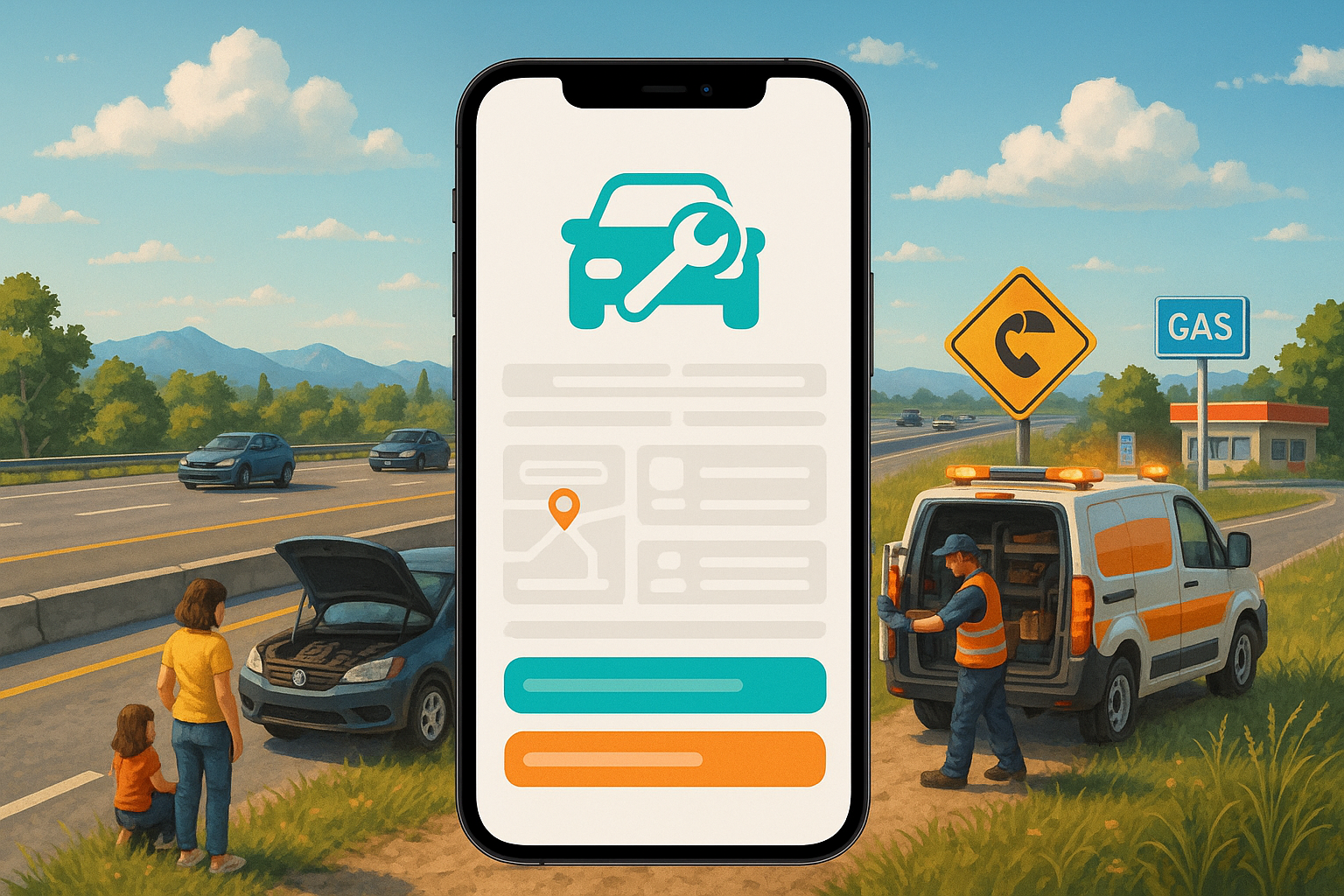
A flat tire on a deserted highway. A dead battery in a crowded parking lot. A fender bender during rush hour. These are universal frustrations for drivers, moments where immediate, reliable help is not just a convenience but a necessity. The rise of on-demand services has transformed consumer expectations, and roadside assistance is no exception. Drivers now expect to summon help with a few taps on their smartphone, track the service provider’s arrival in real-time, and handle payments seamlessly within an app.
However, building a robust Roadside Assistance app is a far more complex undertaking than it appears. It involves orchestrating a delicate dance of real-time logistics, managing a two-sided marketplace of drivers and service providers, integrating sophisticated mapping and payment technologies, and ensuring unwavering reliability when users need it most. For many businesses, attempting this in-house leads to frustrating technical setbacks, budget overruns, and a final product that fails to meet user expectations.
This article serves as a comprehensive guide to navigating the world of custom Roadside Assistance app development. We will explore what these apps entail, dissect the significant challenges of building one from scratch, and make the case for why a custom development approach is superior to off-the-shelf solutions. We will also break down the factors that influence development costs and introduce you to top development companies that can turn your vision into a reality.
Leading the charge in this specialized field is metacto. As a top US AI-powered app development firm, we are mobile app experts with over 100 successful app launches under our belt. We don’t just write code; we are product strategists who understand the unique challenges startups face in the competitive US market. We turn big ideas into real-world success, and we’re here to show you how to build your Roadside Assistance app the right way, from Day One.
What is a Roadside Assistance App?
At its core, a Roadside Assistance app is a digital platform that connects motorists experiencing vehicular trouble with professional service providers who can offer help. It digitizes and streamlines a traditionally fragmented and often stressful process, replacing frantic phone calls and uncertain wait times with a clear, efficient, and user-friendly mobile experience.
A modern, well-built Roadside Assistance app typically consists of two distinct interfaces—one for the stranded driver (the customer) and one for the service provider (the tow truck driver, mechanic, etc.)—all powered by a robust backend system.
Key Features for the Driver (Customer App)
- User Registration & Profile Management: Secure and simple onboarding where users can save personal details, vehicle information (make, model, year), and payment methods.
- One-Tap Service Request: An intuitive interface allowing users to quickly request help, often using the phone’s GPS to automatically pinpoint their location.
- Service Selection: A clear menu of available services, such as towing, tire change, battery jump-start, fuel delivery, or lockout assistance.
- Real-Time GPS Tracking: An interactive map that shows the user’s location and the real-time position of the dispatched service provider, complete with an accurate Estimated Time of Arrival (ETA).
- In-App Communication: Secure channels for text messaging or voice calls between the driver and the service provider to share critical details (e.g., “I’m in the northbound lane just past exit 42”).
- Secure In-App Payments: Integration with trusted payment gateways to handle transactions, subscriptions, or membership fees without requiring cash or physical cards on site.
- Service History & Receipts: A log of past service requests and digital receipts for easy record-keeping and expense reporting.
- Ratings and Reviews: A two-way feedback system that builds trust and helps maintain high-quality service across the provider network.
Key Features for the Service Provider (Provider App)
- Provider Profile & Availability: A dashboard where providers can manage their profile, list their services and equipment, set their service area, and toggle their availability on or off.
- Job Notifications: Real-time alerts for new service requests in their vicinity, including details about the driver’s location, vehicle, and the nature of the problem.
- Job Management: Tools to accept or decline jobs, manage their queue, and update their status (e.g., en route, on-site, job complete).
- In-App Navigation: Integrated mapping that provides the most efficient route to the stranded driver’s location.
- Earnings Dashboard: A transparent view of completed jobs, earnings per job, and payout history.
This ecosystem of features creates a seamless, on-demand service that provides peace of mind for drivers and a steady stream of business for service providers.
Reasons It Is Difficult to Develop a Roadside Assistance App In-House
While the feature list may seem straightforward, the underlying technical complexity is immense. Many companies underestimate the challenge and find their in-house teams quickly overwhelmed. Here are the primary reasons why building a Roadside Assistance app is so difficult.
1. The Complexity of Real-Time Logistics and Geolocation
This isn’t just about dropping a pin on a map. A successful app requires a sophisticated geolocation engine that can:
- Accurately locate users, even in areas with spotty GPS signals.
- Integrate seamlessly with mapping APIs like Google Maps or Mapbox for routing, traffic data, and ETA calculations.
- Implement a smart dispatching algorithm that automatically assigns the nearest, most qualified service provider to a job. This algorithm must consider factors like provider availability, vehicle type, required equipment, and traffic conditions.
- Provide true real-time tracking of the service vehicle, which requires constant, low-latency data synchronization between the provider’s app, the backend server, and the customer’s app. This is a significant drain on battery life and data if not engineered correctly.
2. The Nuances of a Two-Sided Marketplace
You are not building one app; you are building two distinct experiences for two different user groups (drivers and providers) that must interact perfectly. This introduces several challenges:
- Different User Flows and Interfaces: The needs, goals, and technical savvy of a stranded motorist are completely different from those of a professional tow truck operator. Each app must have a purpose-built UI/UX.
- Balancing Supply and Demand: The platform must attract and retain enough service providers to ensure fast response times for drivers, while also providing enough jobs to keep providers engaged. This is a classic “chicken and egg” problem that many marketplaces fail to solve. At metacto, we have direct experience solving this, having launched a 2-sided marketplace with discoverability for Parrot Club.
- Verification and Trust: You need a robust system for vetting and onboarding service providers, including background checks, insurance verification, and equipment inspection, to ensure user safety and service quality.
3. The Need for Scalable and Secure Infrastructure
A Roadside Assistance app cannot afford downtime. A server crash during a snowstorm could leave users stranded in dangerous conditions. The backend infrastructure must be:
- Highly Scalable: It must be able to handle sudden spikes in demand without performance degradation. Think of the surge in requests during the first winter storm of the year or a major holiday travel weekend.
- Secure: The app will handle sensitive personal data, location information, and payment details. Building a fast, secure, and high-performing mobile app is paramount, and it’s something we excel at. Any security breach would be catastrophic for user trust.
- Reliable: It requires a high degree of fault tolerance and redundancy to ensure the service is always available, 24/7/365.
4. Integrating Complex Third-Party Services
No app is an island. A Roadside Assistance app relies heavily on a network of third-party APIs for essential functionality:
- Payment Gateways (Stripe, Braintree): Integrating payments is complex. It requires not only handling customer payments but also managing payouts to a network of independent providers, calculating commissions, and ensuring PCI compliance.
- Mapping & Navigation (Google Maps API, Waze): These services come with usage costs that can scale quickly, and they must be integrated efficiently to avoid performance bottlenecks.
- Communication Platforms (Twilio): Building in-app chat and SMS notifications requires integration with communication APIs, adding another layer of complexity and cost.
- AI and Machine Learning Services: For advanced features like demand prediction, dynamic pricing, or AI-powered vehicle diagnostics, you need specialized expertise in AI Development. This is often far beyond the scope of a generalist in-house development team.
Attempting to tackle these challenges without specialized experience often leads to a frustrating cycle of missed deadlines and technical debt. This is why partnering with a dedicated app development agency is not just a shortcut, but a strategic decision.
Why Custom App Development for Roadside Assistance?
With the complexity established, some might wonder about using a white-label or off-the-shelf solution. While these can seem like a cheaper and faster option initially, they often create more problems than they solve for a service as nuanced as roadside assistance. A custom approach is almost always the superior choice for long-term success.
1. Tailored User Experience and Brand Identity
Your app is a direct reflection of your brand. A custom build allows you to design a unique user interface (UI) and user experience (UX) that aligns with your brand identity and resonates with your target audience. You control every pixel, every workflow, and every interaction, ensuring the app feels intuitive and trustworthy. Off-the-shelf solutions force you into a generic template that looks and feels like a dozen other apps, making it impossible to stand out.
2. A Scalable Architecture Built for Growth
White-label solutions are often built on a rigid, one-size-fits-all architecture. As your business grows—adding more users, expanding to new regions, or introducing new services—you will quickly hit the limitations of that platform. A custom-built app is designed with scalability in mind from Day One. We help our clients build smart and scale fast by creating a flexible backend architecture that can evolve with their business needs, not constrain them.
3. Integration of Unique and Differentiating Features
How will your service be different from the competition? Perhaps you want to offer a tiered subscription model, integrate with smart car telematics, use AI to diagnose problems from a photo, or offer specialized services for electric vehicles. These differentiating features are impossible to implement with a rigid, pre-built solution. Custom development gives you the freedom to innovate and build a competitive moat. We have extensive experience helping clients turn 1-time sales into recurring subscription revenue and implement cutting-edge AI, as we did for G-Sight.
4. Full Ownership and Control
When you use a white-label platform, you are essentially renting the technology. You are subject to their terms, their feature roadmap, and their pricing changes. If the platform shuts down, your entire business is at risk. With a custom build, you own the source code and the intellectual property. You are in complete control of your destiny, free to pivot, expand, or sell the business on your own terms.
5. Optimized Performance and Security
Generic platforms are often bloated with features you don’t need, which can slow down performance. A custom app is lean and optimized for its specific purpose, resulting in a faster, more responsive experience for users. Furthermore, you can implement bespoke security measures tailored to your specific data and transaction needs, providing a higher level of protection than a generic solution can offer. As mobile app experts who have overseen over 100 app launches, we know what it takes to build fast, secure, and high-performing mobile apps that stand out.
Different Types of Roadside Assistance Apps
The market for Roadside Assistance is not monolithic. Different business models cater to different needs, and the type of app you build will depend on your specific strategy.
1. The Dedicated Service Model
This model is used by large, established companies that operate their own fleet of service vehicles and employ their own technicians. Examples include national automobile associations (like AAA) or major insurance companies (like Allstate).
- App Focus: The app serves as the primary interface for their existing members or policyholders. The goal is to improve service efficiency, reduce call center volume, and enhance customer loyalty.
- Key Challenge: Integrating the app with legacy backend systems (like CRM and dispatch software) and managing the logistics of a large, owned fleet.
2. The Aggregator/Marketplace Model
This is the “Uber for Towing” model. The company does not own any tow trucks but instead builds a technology platform that connects a large network of independent, third-party service providers with drivers in need.
- App Focus: The core of the business is the two-sided marketplace. The app must excel at provider onboarding, job matching, payment processing, and quality control through ratings.
- Key Challenge: Achieving critical mass on both sides of the marketplace. This requires a strong marketing and growth strategy to attract both drivers and providers simultaneously.
3. The Motor Club Membership Model
This model focuses on selling memberships that include roadside assistance as a key benefit. The assistance itself might be delivered through a dedicated fleet, an aggregator network, or a hybrid of the two.
- App Focus: The app is a key tool for member engagement and retention. Beyond service requests, it might include features like trip planning, discounts, or vehicle maintenance reminders. The monetization strategy is centered on converting users to annual subscriptions.
- Key Challenge: Demonstrating enough value to justify a recurring subscription fee. We have a proven track record here, having helped clients like G-Sight and Parrot Club convert 10% of their customers to annual subscriptions.
Choosing the right model is the first step. The next is understanding the investment required.
Cost Estimate for Developing a Roadside Assistance App
Determining a precise cost for a custom app without a detailed scope is impossible. However, we can provide a realistic breakdown of the factors that influence the final price and offer a general cost range. A simple Rapid MVP (Minimum Viable Product) could start in the range of $50,000 - $80,000, while a full-featured, multi-platform, AI-enhanced application could easily exceed $250,000.
Our Rapid MVP Development service is designed to build, test, and validate app concepts as quickly as possible, without overspending, making it an ideal starting point.
Here are the key cost drivers:
| Cost Factor | Description | Impact on Cost |
|---|---|---|
| Features & Complexity | The number and complexity of features directly impact development time. An MVP with basic location, request, and dispatch functionality will cost significantly less than an app with AI-powered ETAs, subscription tiers, and complex payment splitting. | High |
| Platform Choice | Will the app be for iOS, Android, or both? Native development for each platform is more expensive but offers the best performance. A cross-platform approach can reduce initial costs but may have limitations. A web-based admin panel is also required. | High |
| UI/UX Design | The level of design fidelity plays a major role. A basic, template-based design is cheaper than a fully custom, animated, and user-tested design system. A premium UX is critical for user trust in a service like this, making it a worthwhile investment. | Medium |
| Backend Development | This is the engine of the app. A complex backend with smart dispatching algorithms, multiple API integrations, and a scalable server architecture will be a significant portion of the budget. | High |
| Development Team | The size, experience, and location of the development team are major factors. An experienced, US-based team with dedicated project managers, designers, and engineers will have a higher rate but will often deliver a superior product faster, with fewer costly mistakes. Our US-based product strategists understand the market and the unique challenges of startups in this space. | High |
| Post-Launch Support | Development doesn’t end at launch. Ongoing maintenance, bug fixes, server hosting, and feature updates are recurring costs that must be budgeted for. We do more than just develop; we provide App Growth services to attract users, drive engagement, and generate revenue long after launch. | Medium |
Top Roadside Assistance App Development Companies
Choosing the right development partner is the most critical decision you will make. You need a team with proven expertise in mobile development, marketplace dynamics, and complex logistical systems.
1. metacto
As a leading US-based mobile app development agency, we specialize in turning ambitious ideas into market-leading applications. Startups are our bread and butter, and we provide the strategic and technical expertise needed to navigate the journey from concept to successful launch and beyond.
- Proven Mobile Experts: With over 100 successful app launches, we have a deep understanding of what it takes to build exceptional mobile experiences. We build fast, secure, and high-performing apps that stand out in a crowded market.
- Specialized Experience: Our work is directly relevant to the challenges of a Roadside Assistance app. We have successfully launched 2-sided marketplaces (Parrot Club), built sophisticated apps that support users in 8 countries (Parrot Club), and engineered platforms that turn one-time users into loyal subscribers (G-Sight, Mamazen), with Mamazen generating over $500k in annual subscriptions.
- AI Integration Prowess: We don’t just follow trends; we implement cutting-edge technology. Our AI Development services can bring intelligence to your app, from smarter dispatching to predictive maintenance alerts. We implemented cutting-edge computer vision AI for G-Sight, demonstrating our ability to integrate complex AI solutions that deliver real business value.
- End-to-End Partnership: We are more than just developers; we are partners in your success. Our services span the entire lifecycle of an app, from initial strategy and Mobile App Development to post-launch App Growth and Monetization. We help our clients attract users, drive engagement, and generate revenue long after launch.
- US-Based Strategy: Our product strategists are based in the US and possess an intimate understanding of the market and the unique challenges startups face. We guide you to build your app the right way, from Day One, ensuring you start strong, build smart, and scale fast.
2. (Other Company A)
This is a large, global IT consulting firm with a vast portfolio spanning multiple industries. They are a safe choice for enterprise-level projects that require significant resources and have a strong focus on process and documentation. They may be less agile and more expensive than a specialized agency.
3. (Other Company B)
This is a boutique development agency that focuses exclusively on logistics and on-demand delivery applications. They have deep domain expertise in this specific niche, which can be valuable. Their focus may be narrower, and they may lack experience in other areas like subscription monetization or advanced AI.
4. (Other Company C)
This is an offshore development company known for its competitive pricing. They can be a good option for startups on a very tight budget. However, working with them can present challenges related to time zones, communication barriers, and quality control, potentially leading to the need for a Project Rescue down the line.
Conclusion: Your Road to a Successful App
Developing a custom Roadside Assistance app is a complex but achievable goal. It represents a massive opportunity to disrupt a traditional industry and provide immense value to drivers everywhere. As we’ve covered, the journey involves navigating significant technical challenges, from real-time geolocation and two-sided marketplace dynamics to scalable infrastructure and secure payments.
The key to success lies in avoiding the pitfalls of an under-resourced in-house attempt or a restrictive white-label solution. A custom development path, guided by an experienced partner, offers the flexibility, scalability, and control needed to build a truly differentiated and successful product. By carefully considering your business model, core features, and budget, you can lay the groundwork for a powerful application.
The right development partner will do more than just write code. They will act as a strategic guide, helping you make the right technical decisions, avoid common mistakes, and position your app for long-term growth.
If you’re ready to turn your big idea for a Roadside Assistance app into a real-world success, the next step is to talk with an expert.
Talk with a Roadside Assistance app development expert at metacto today to get a clear path forward.