Introduction
In an era where the smartphone is the primary portal to the digital world, the transition from e-commerce to mobile commerce, or M-Commerce, is not just a trend—it is a fundamental shift in consumer behavior. Businesses that fail to meet their customers on their preferred platform risk becoming obsolete. However, developing a high-performing M-Commerce application is a formidable task, fraught with technical complexities, security challenges, and the constant pressure to deliver a flawless user experience. Many organizations find their in-house teams unequipped to handle the specialized demands of building a mobile-first retail channel from the ground up.
This article serves as a comprehensive guide to navigating the intricate world of custom M-Commerce app development. We will explore what defines an M-Commerce app, dissect the significant hurdles of in-house development, and make a compelling case for why a custom-built solution is often the most strategic investment for long-term growth. Furthermore, we will provide a transparent look at the potential costs and introduce you to the premier partner for this journey.
As a top US AI-powered app development firm, we at metacto have over two decades of experience transforming ambitious ideas into market-leading mobile applications. We understand that an M-Commerce app is more than just a digital storefront; it is a critical revenue driver, a powerful brand-building tool, and a direct line to your most loyal customers. Throughout this guide, we will share insights gleaned from launching over 100 successful apps, demonstrating how a strategic development partnership can turn the challenges of M-Commerce into your greatest competitive advantage.
What is an M-Commerce App?
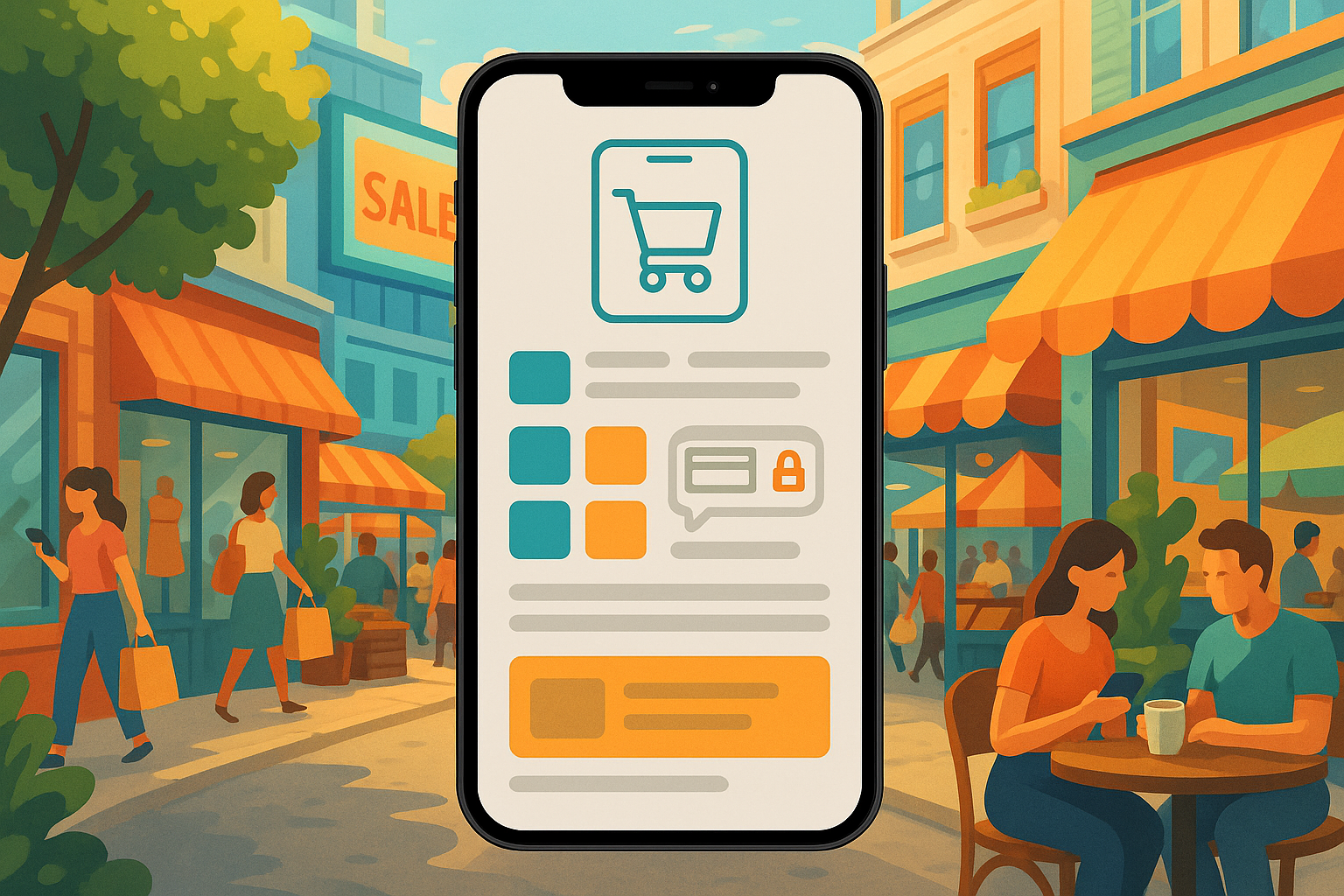
Mobile Commerce, commonly known as M-Commerce, refers to any monetary transaction completed using a mobile device, such as a smartphone or tablet. It is a natural evolution of e-commerce, tailored specifically for the on-the-go, always-connected nature of the modern consumer. An M-Commerce app is a standalone software application designed and built for a mobile operating system (like iOS or Android) that allows users to browse, select, and purchase products or services directly from their devices.
Unlike a mobile-responsive website, which adapts a desktop experience to a smaller screen, a native M-Commerce app is built from the ground up for the mobile environment. This allows it to leverage device-specific features like push notifications for targeted promotions, GPS for location-based offers, and biometric authentication for secure, one-tap payments. This native integration creates a faster, more intuitive, and deeply engaging shopping experience that a mobile browser simply cannot replicate.
The scope of M-Commerce extends beyond traditional retail. It encompasses a wide range of activities, including mobile banking, in-app purchases, digital content delivery, mobile ticketing, and service booking. At its core, an M-Commerce app is a dedicated channel that places a business’s entire catalog, brand experience, and checkout process into the pocket of its customers, accessible anytime and anywhere. For businesses looking to thrive in the digital marketplace, a well-executed M-Commerce app is no longer a luxury but an essential component of a robust commercial strategy.
Reasons It Is Difficult to Develop an M-Commerce App In-House
While the allure of building an M-Commerce application with an internal team can be strong, the practical realities often present insurmountable challenges for even well-established companies. The process is far more complex than simply creating a digital product catalog. It requires a confluence of diverse, highly specialized skills, a deep understanding of mobile-specific architecture, and a relentless focus on security and performance. Attempting this journey without the requisite expertise can lead to budget overruns, missed deadlines, and a final product that fails to meet customer expectations.
One of the most significant hurdles is assembling the right talent. A successful M-Commerce app requires not one but several distinct expert roles:
- iOS Developers: Proficient in Swift or Objective-C.
- Android Developers: Proficient in Kotlin or Java.
- Backend Developers: To build and maintain the server, database, and APIs that power the app.
- UI/UX Designers: Specialized in creating intuitive, engaging interfaces for small screens.
- Quality Assurance (QA) Engineers: To test the app across a vast array of devices, screen sizes, and operating system versions.
- A Project Manager or Product Owner: To steer the project and ensure it aligns with business goals.
Hiring, training, and retaining such a diverse team is not only expensive but also time-consuming. The competition for top mobile development talent is fierce, and the cost of salaries, benefits, and tools can quickly escalate, making it an economically unviable option for many businesses.
Beyond the human resource challenge lies the technical complexity. Building a secure and scalable payment gateway integration is a non-trivial task that requires strict adherence to Payment Card Industry Data Security Standard (PCI DSS) compliance. Ensuring the application performs flawlessly under heavy traffic, especially during peak shopping seasons, demands sophisticated backend architecture and load-balancing strategies. Furthermore, the app must seamlessly integrate with existing business systems, such as inventory management, customer relationship management (CRM), and enterprise resource planning (ERP) software. Each of these components is a project in itself, requiring specialized knowledge that is rarely found within a single in-house team. This is where partnering with a dedicated agency like metacto, which possesses a full-stack, experienced team, becomes a strategic advantage, de-risking the project and accelerating the timeline from concept to launch.
Why Custom App Development for M-Commerce
In the quest to launch an M-Commerce presence, businesses often face a critical decision: use a ready-made, off-the-shelf platform or invest in a custom-developed application. While solutions leveraging a Shopify software development kit (SDK) or other pre-built platforms can indeed offer a cost-effective shortcut to get a mobile store up and running, this approach often comes with significant limitations in terms of branding, functionality, and scalability. For businesses aiming to build a unique brand identity and a lasting competitive advantage, custom app development is the definitive path forward.
A custom M-Commerce app is tailored precisely to your business’s unique brand, operational workflows, and customer journey. You are not confined to the templates and feature sets of a third-party platform. This freedom allows for the creation of a truly bespoke user experience that can delight customers and foster brand loyalty. Whether it’s implementing a unique loyalty program, an augmented reality “try-on” feature, or a highly personalized recommendation engine, custom development empowers you to innovate beyond the capabilities of your competitors.
The tangible benefits of this approach are best illustrated by real-world success stories. Consider the partnership between KFC and the development agency Appinventiv. By investing in custom mobile applications, KFC achieved remarkable, business-altering results:
- A 22% increase in conversion rates: A custom, frictionless checkout process and intuitive user interface directly translated into more completed sales.
- A 60% increase in repeat purchases: The app’s design and features fostered customer loyalty, turning one-time buyers into regular patrons.
- A 4.5 average rating on both the Play Store and App Store: This high rating serves as powerful social proof, encouraging new downloads and building trust in the brand.
- Streamlined operational efficiency: The custom solution allowed KFC to manage its food delivery process directly, reducing reliance on third-party aggregators and giving them greater control over the customer experience.
This case study demonstrates that a custom application is not merely an expense but a strategic investment that drives key business metrics. It ensures that proper app development services directly contribute to both client engagement and operational excellence. By choosing the custom route, you are building a proprietary asset that can adapt and scale with your business, unencumbered by the restrictions of a one-size-fits-all solution.
Cost Estimate for Developing an M-Commerce App
Determining a precise cost for developing a custom M-Commerce app without a detailed scope is challenging, as the final price is contingent on a multitude of factors. However, it is possible to understand the variables that influence the budget and to recognize that the cost should be viewed as an investment in a primary revenue-generating asset.
For businesses on a tighter budget or those looking to test a market, an off-the-shelf software approach can be a legitimate shortcut to push down the initial mobile app development price. Ready-made e-commerce platforms and SDKs, such as the Shopify SDK, can significantly reduce the cost of an iPhone or Android app by providing pre-built components for core functionalities like product catalogs and checkouts. This approach is often suitable for a Minimum Viable Product (MVP) or a straightforward retail operation.
However, for a fully custom, feature-rich application, the investment will be more substantial. The primary factors that dictate the cost include:
- Complexity and Features: The number and complexity of features are the biggest cost drivers. A simple app with basic product listings and a standard checkout will cost significantly less than an app with features like personalized AI-driven recommendations, AR product visualization, complex user profiles, and sophisticated loyalty programs.
- Platform Choice: Developing for a single platform (either iOS or Android) is less expensive than developing for both. While cross-platform development frameworks can reduce costs compared to building two separate native apps, a native approach often provides the best performance and user experience.
- UI/UX Design: A highly customized, beautifully animated, and extensively tested user interface will require more design and development hours than a more basic, template-driven design. However, this investment often pays for itself through higher user engagement and conversion rates.
- Backend and API Integration: The cost will also depend on the complexity of the backend infrastructure required to support the app and the number of third-party integrations needed (e.g., payment gateways, shipping providers, analytics tools, CRMs, and ERPs).
- Development Team: The location, size, and experience of the development team play a crucial role. Partnering with an experienced agency like metacto provides access to a cohesive team of experts, ensuring a high-quality product and a predictable, transparent development process.
Ultimately, building a custom M-Commerce app is an investment in creating a durable, scalable, and high-performance sales channel that you fully own and control.
Top M-Commerce App Development Company: metacto
Choosing the right development partner is the single most critical decision you will make in your M-Commerce journey. The right agency brings more than just coding skills; they bring strategic insight, business acumen, and a proven track record of building applications that generate real revenue. With over 20 years of experience and more than 100 successful apps launched, we at metacto stand as a premier partner for businesses looking to build, grow, and monetize their mobile presence.
Our philosophy is simple: we don’t just build apps, we build businesses. We understand that success in M-Commerce isn’t just about having a functional application; it’s about creating sustainable revenue streams. Our expertise in app monetization is a core part of our value proposition. We have a proven history of transforming business models and maximizing profitability for our clients. For the G-Sight app, we successfully turned one-time sales into a recurring subscription revenue model, creating predictable and scalable income. For the Mamazen app, we created a scalable subscription revenue system that serves as the foundation of their business.
Our capabilities extend to building complex, multifaceted platforms. We demonstrated this with the Parrot Club app, where we launched a two-sided marketplace complete with sophisticated discoverability features. This showcases our ability to handle intricate M-Commerce models that go far beyond a simple digital storefront. We build platforms that connect buyers and sellers, creators and consumers, and facilitate entire ecosystems within a single application.
As an AI-powered firm, we leverage cutting-edge technology to give our clients a competitive edge. From developing sophisticated recommendation engines that increase average order value to implementing AI-driven chatbots for instant customer support, our AI development services are integral to creating intelligent and personalized M-Commerce experiences. Our expertise is recognized by our clients, who have given us a 5.0-star rating on Clutch, a leading B2B ratings and reviews platform. When you partner with us, you are not just hiring developers; you are gaining a strategic technology partner dedicated to your long-term success.
Conclusion
The landscape of retail has irrevocably shifted to mobile, and establishing a commanding presence in the M-Commerce space is now essential for growth and survival. Throughout this guide, we have navigated the key aspects of this digital frontier, from defining the M-Commerce app to understanding the profound challenges of building one in-house. We’ve highlighted why a custom development approach, despite its initial investment, unlocks unparalleled opportunities for brand differentiation, customer loyalty, and operational control, as evidenced by the powerful results seen in real-world case studies. We also provided a clear-eyed view of the costs involved, emphasizing that this is an investment in a core business asset.
Choosing the right partner to build this asset is paramount. The journey requires a team that possesses not only deep technical expertise but also a strategic understanding of how to build and monetize a mobile business. At metacto, we have spent over two decades honing this exact blend of skills, launching over 100 successful applications and consistently delivering results that impact the bottom line. Our work with apps like G-Sight, Mamazen, and Parrot Club demonstrates our ability to engineer sophisticated monetization strategies and build complex marketplace platforms.
Your M-Commerce application has the potential to be your most powerful sales channel and your most intimate connection to your customers. Do not leave its creation to chance.
Ready to build an M-Commerce app that drives revenue and delights customers? Talk with an expert at metacto today to discuss your vision.