Introduction
The digital transformation of healthcare is not a future trend; it is the present reality. For pharmacies, this shift presents both a monumental opportunity and a significant challenge. Patients now expect the same level of digital convenience from their healthcare providers as they do from retail or banking services. A custom pharmacy app is no longer a peripheral nice-to-have but a core component of modern patient care and business strategy. It offers a direct line to patients, fostering loyalty, improving medication adherence, and streamlining operations in ways that were previously unimaginable.
However, the path to developing a successful pharmacy app is fraught with complexity. Unlike a standard e-commerce or lifestyle application, a pharmacy app operates within one of the most heavily regulated industries in the world. It must handle sensitive Protected Health Information (PHI) with uncompromising security, adhere to stringent regulations like HIPAA, and seamlessly integrate with a labyrinth of existing, often legacy, healthcare IT systems. Attempting this journey without a seasoned guide is a recipe for budget overruns, compliance failures, and a product that fails to meet the needs of its users.
This article serves as a comprehensive guide to navigating the intricate world of custom pharmacy app development. We will explore what a pharmacy app entails, dissect the formidable challenges of in-house development, and articulate the compelling case for a custom-built solution. We will also cover the different types of pharmacy apps, provide a realistic framework for estimating costs, and introduce the leading development companies that can turn your vision into a reality.
At metacto, a premier US-based AI-powered app development firm, we have spent over two decades building, launching, and scaling complex mobile applications. We understand that developing a pharmacy app is not just about writing code; it’s about engineering trust, ensuring safety, and delivering a flawless user experience. Throughout this guide, we will share our expert insights on how to build a compliant, secure, and market-leading pharmacy application that drives tangible results for your business and better health outcomes for your patients.
What is a Pharmacy App?
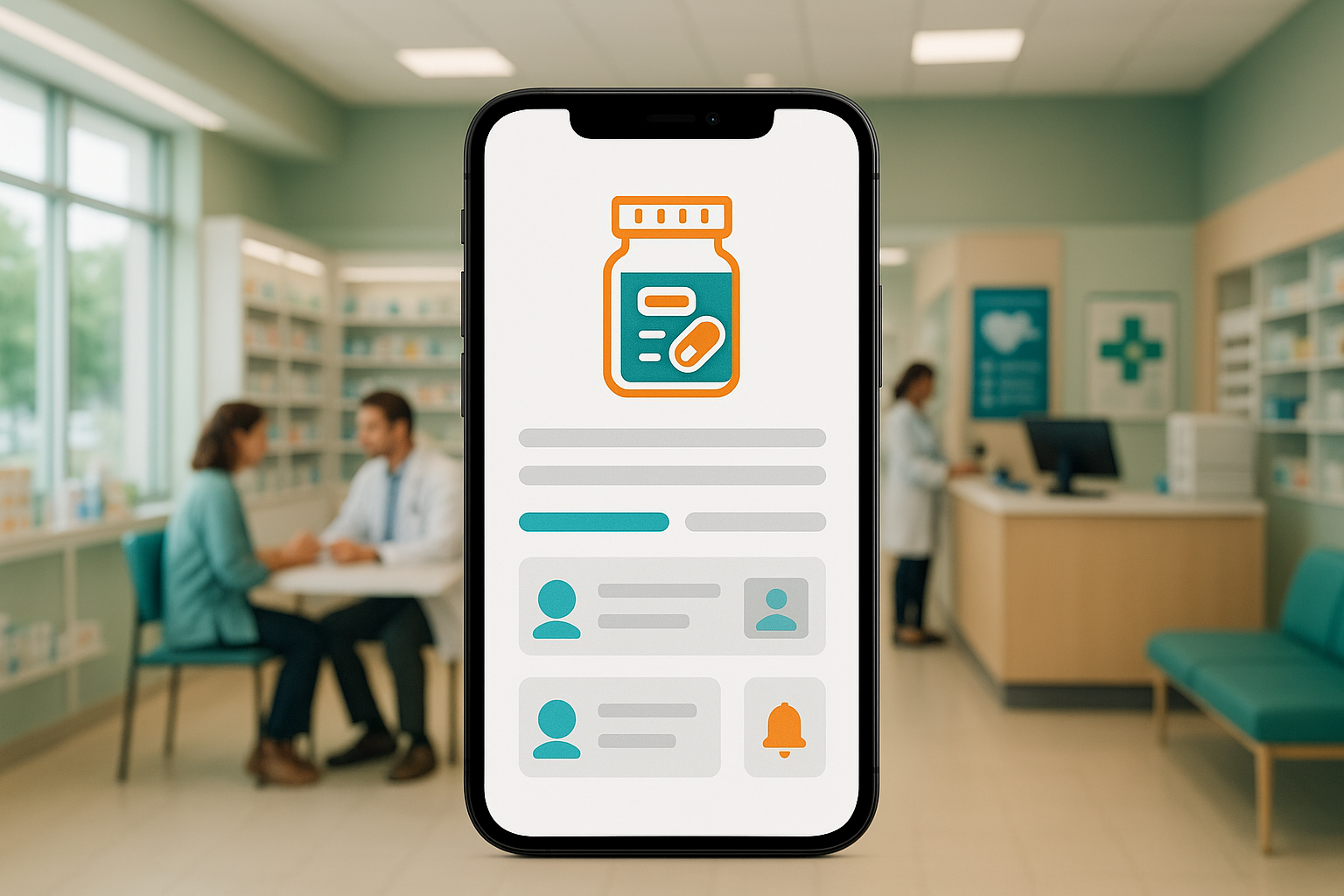
At its core, a pharmacy app is a mobile application designed to bridge the gap between patients, pharmacists, and prescription medications. It transforms the traditionally cumbersome process of managing prescriptions into a simple, intuitive digital experience. However, to label it merely as a “prescription refill app” would be a gross oversimplification. A modern, well-executed pharmacy app is a multifaceted digital health tool that serves as a central hub for a patient’s medication management journey.
For patients, the value proposition is clear and immediate. A pharmacy app offers unparalleled convenience. It empowers them to:
- Manage Prescriptions: Users can request refills with a single tap, view their complete prescription history, check the status of a refill, and transfer prescriptions from other pharmacies.
- Improve Medication Adherence: Through automated reminders, customizable schedules, and dose tracking, the app becomes a crucial partner in helping patients take the right medication at the right time, a critical factor in managing chronic conditions.
- Access Information: Patients can access detailed information about their medications, including potential side effects, drug interactions, and educational content, all from a trusted source.
- Communicate Securely: The app can facilitate secure, HIPAA-compliant messaging with pharmacists, allowing patients to ask questions about their medications without needing to call or visit in person.
- Streamline Payments and Pickups: Integrated payment systems and features like scheduling in-store pickups or managing home delivery simplify the entire transaction process.
For pharmacies and healthcare organizations, the app is a powerful strategic asset that drives operational efficiency and deepens customer relationships. The benefits include:
- Increased Efficiency: Automating refill requests and routine inquiries frees up valuable pharmacist time, allowing them to focus on higher-value patient consultations and clinical services.
- Enhanced Patient Loyalty: By providing a convenient, reliable, and personalized digital experience, pharmacies can build stronger, lasting relationships with their customers, significantly reducing churn.
- Improved Health Outcomes: By boosting medication adherence, the app contributes directly to better patient health outcomes, which is increasingly a key metric for healthcare providers and payers.
- New Revenue Streams: The app can serve as a platform for offering additional services, such as telehealth consultations, wellness products, or targeted promotional campaigns.
Crucially, a pharmacy app does not operate in a vacuum. Its true power is unlocked through deep integration with the existing healthcare IT infrastructure. This includes connecting seamlessly with the Pharmacy Management System (PMS) to process refills, linking with Electronic Health Record (EHR) and Electronic Medical Record (EMR) systems to provide a holistic view of a patient’s health, and interfacing with insurance providers for real-time eligibility and copay information. This intricate web of integrations is what elevates a simple app into a vital component of the connected health ecosystem.
Reasons It Is Difficult to Develop a Pharmacy App In-House
The prospect of developing a pharmacy app in-house can seem appealing, promising full control and potential cost savings. However, the reality is that the unique challenges of this domain make it one of the most difficult types of applications to build without specialized, external expertise. The risks of failure are not just financial; they include catastrophic legal penalties, irreparable damage to brand reputation, and most importantly, potential harm to patients.
Here are the primary reasons why in-house development is so perilous:
1. Navigating the Regulatory Minefield
Healthcare is governed by a dense and unforgiving web of regulations, with the Health Insurance Portability and Accountability Act (HIPAA) being the most prominent. Achieving and maintaining HIPAA compliance is a monumental task that extends far beyond a simple checklist. It dictates every aspect of how Protected Health Information (PHI) is created, stored, transmitted, and secured.
An in-house team must have a deep, legal-grade understanding of:
- The HIPAA Privacy Rule: Governs who can access and use PHI.
- The HIPAA Security Rule: Mandates specific administrative, physical, and technical safeguards. This includes everything from access control protocols and encryption standards to audit trails and disaster recovery plans.
- The HITECH Act: Strengthens HIPAA rules and introduces severe penalties for data breaches.
- State-Level Regulations: Many states have their own data privacy and security laws that add another layer of complexity.
A single misstep can result in fines reaching millions of dollars per violation. Without a dedicated compliance officer and developers who are experts in building HIPAA-compliant software, the legal and financial risks are simply too high.
2. The Imperative of Bulletproof Security
Beyond regulatory compliance, the ethical obligation to protect sensitive patient data is paramount. Pharmacy apps are a prime target for cyberattacks due to the high value of medical information on the black market. Building a secure application requires a multi-layered, defense-in-depth strategy that most generalist development teams are not equipped to implement.
This includes:
- End-to-End Encryption: All data, both in transit over networks and at rest on servers or devices, must be encrypted using industry-standard algorithms.
- Secure Authentication and Authorization: Implementing multi-factor authentication (MFA), biometric logins, and role-based access controls to ensure only authorized users can access specific information.
- Penetration Testing and Vulnerability Scanning: Regularly subjecting the application to rigorous security audits by third-party experts to identify and remediate weaknesses before they can be exploited.
- Secure Coding Practices: Adhering to standards like those from OWASP (Open Web Application Security Project) to prevent common vulnerabilities like SQL injection or cross-site scripting.
3. The Labyrinth of System Integrations
A pharmacy app’s functionality is entirely dependent on its ability to communicate with a disparate array of external systems. This is arguably the most significant technical hurdle. Pharmacy Management Systems (PMS), Electronic Health Records (EHRs), e-prescribing networks (like Surescripts), and insurance adjudication systems often use legacy technologies, proprietary data formats, and poorly documented APIs.
An in-house team would need highly specialized experience in:
- Healthcare Interoperability Standards: Deep knowledge of standards like HL7 (Health Level Seven) and FHIR (Fast Healthcare Interoperability Resources) is essential for data exchange.
- API Integration: The ability to securely and reliably connect with dozens of different APIs, handling complex authentication protocols and mapping data between systems.
- Legacy System Modernization: Often, custom middleware must be developed to bridge the gap between a modern mobile app and an older, on-premise PMS or EHR.
4. Designing for a Diverse and Vulnerable User Base
The user experience (UX) for a pharmacy app carries a weight of responsibility far greater than most other apps. The user base is incredibly diverse, ranging from young, tech-savvy individuals to elderly patients who may have visual impairments, limited dexterity, or low digital literacy. A confusing interface or an unclear workflow could lead a patient to make a critical medication error.
This requires a design process focused on:
- Accessibility: Strict adherence to Web Content Accessibility Guidelines (WCAG) to ensure the app is usable by people with disabilities.
- Clarity and Simplicity: Every screen, button, and piece of text must be unambiguous and easy to understand. The design must prioritize safety and prevent user error.
- Building Trust: The UI/UX must convey a sense of professionalism, security, and trustworthiness to encourage user adoption and consistent use.
Hiring a development agency like metacto mitigates these risks. With over 20 years of experience launching complex applications, we bring a team of specialists to the table—experts in healthcare compliance, data security architects, integration engineers, and UX designers who understand the unique demands of the medical field. We’ve navigated these challenges before and can provide the strategic leadership and technical execution needed to build your app the right way, from day one.
Why Custom App Development for Pharmacy?
In a market with some white-label or off-the-shelf pharmacy solutions, the decision to invest in custom development is a strategic one. While pre-built solutions might seem faster or cheaper initially, they often come with significant limitations that can stifle growth, compromise user experience, and fail to meet the specific needs of your business. Custom development, in contrast, provides a powerful foundation for a truly competitive and effective digital health platform.
Here’s why a custom approach is superior for pharmacy applications:
Tailored to Your Unique Workflows
No two pharmacies operate in exactly the same way. Your business has unique workflows for prescription intake, verification, fulfillment, and patient consultation. An off-the-shelf solution forces you to adapt your proven processes to its rigid software. Custom development does the opposite: the app is built around your specific operational model. This tailored fit maximizes staff efficiency, reduces the need for cumbersome workarounds, and ensures the technology serves your business, not the other way around.
A Differentiated Brand and User Experience
In a competitive market, brand identity and customer experience are key differentiators. A custom app allows you to create a unique, branded experience that reflects your commitment to patient care. You control every pixel of the user interface (UI) and every step of the user journey (UX). This enables you to craft an intuitive, seamless, and reassuring experience that builds patient trust and fosters loyalty. A generic, white-label app simply cannot create the same level of brand recognition or customer connection.
Uncompromising Security and Compliance
With custom development, security and compliance are not afterthoughts; they are foundational pillars of the architecture. You have complete control and transparency over the security measures being implemented. We can design a security framework specifically for your risk profile, incorporating the latest encryption standards, authentication protocols, and data storage solutions. You can mandate the specific audit trails and access controls required to demonstrate HIPAA compliance with confidence, rather than relying on the opaque promises of a third-party vendor.
Scalability for Future Growth
Your business is going to grow, and your digital strategy must be able to grow with it. A custom-built application is designed on a scalable architecture that can handle increasing user loads, data volumes, and feature complexity. As you look to the future, you may want to integrate advanced features like AI-powered medication adherence tools, telehealth video consultations, or personalized wellness programs. A custom platform provides the flexible foundation needed to add these innovations seamlessly, ensuring your app remains a market leader for years to come.
Full Ownership of a Valuable Asset
When you build a custom app, you own the intellectual property (IP). The source code is a valuable business asset that you control completely. This freedom prevents vendor lock-in and gives you the agility to switch development partners or bring the team in-house in the future if you choose. It also opens up possibilities for licensing your technology or spinning it off into a new venture. An off-the-shelf solution is merely a rental; a custom app is a long-term investment in your company’s future.
Different Types of Pharmacy Apps
The term “pharmacy app” encompasses a range of application types, each designed to serve a different segment of the market or a specific set of user needs. Understanding these categories can help you define the strategic focus for your own custom application.
Pharmacy Marketplace Apps
These applications act as aggregators, connecting users with a network of different pharmacies. Much like a food delivery marketplace, users can upload a prescription, and the app will provide price comparisons from various local and mail-order pharmacies. The primary value proposition is cost savings and convenience. These apps monetize through transaction fees or subscription models. They require complex logic for managing relationships and data feeds from many different pharmacy partners.
Pharmacy Chain Apps
This is perhaps the most common type of pharmacy app, developed by large national or regional pharmacy chains (e.g., Walgreens, CVS, Rite Aid). These apps are comprehensive, all-in-one platforms designed to drive customer loyalty and integrate the digital experience with the physical store.
- Core Features: Prescription refills, order status tracking, medication history, and store locators.
- Advanced Features: Integration with loyalty programs, in-app shopping for non-prescription items, access to in-store clinic appointments, photo printing services, and financial management tools.
- Strategic Goal: To create a “sticky” ecosystem that keeps patients within the chain’s network for all their health and wellness needs.
Independent Pharmacy Apps
Custom apps for independent or small-chain pharmacies are designed to leverage their key competitive advantage: personalized service and community trust. While they may not have the vast feature sets of the large chains, they focus on strengthening the pharmacist-patient relationship.
- Core Features: Easy refills, secure two-way messaging with the local pharmacist, home delivery scheduling, and management of family member prescriptions.
- Strategic Goal: To provide a high-touch, convenient digital experience that complements their reputation for personal care, helping them compete effectively against larger corporations.
Prescription Management & Adherence Apps
These applications are focused specifically on helping patients manage their medications correctly, regardless of which pharmacy fills them. Their primary user is often a patient with a chronic condition who manages multiple prescriptions.
- Core Features: Sophisticated medication reminder systems, dose confirmation tracking, side-effect logging, and reports that can be shared with doctors.
- Advanced Features: May include AI-powered drug interaction checkers, integration with health tracking devices (like smartwatches), and educational content tailored to the user’s condition.
- Monetization: Often offered by healthcare systems, insurance companies, or pharmaceutical manufacturers as a value-added service to improve health outcomes and reduce long-term healthcare costs.
Cost Estimate for Developing a Pharmacy App
Estimating the cost of a custom pharmacy app requires a detailed analysis of its specific features, complexity, and compliance requirements. There is no one-size-fits-all price tag. The cost is a direct reflection of the development hours required to design, build, test, and launch a secure and reliable product. To provide a realistic perspective, it’s best to break down the cost by feature complexity and other influencing factors.
Breakdown by Feature Set
A typical project is phased, starting with a Minimum Viable Product (MVP) and adding more advanced features in subsequent iterations.
| Feature Category | Description | Estimated Cost Range (USD) |
|---|---|---|
| MVP Core Features | Includes essential functionality to launch and test the core concept. User registration/login, prescription upload via photo, basic refill requests, pharmacy locator, static information pages. | $75,000 - $150,000 |
| Advanced Features | Building on the MVP. Direct integration with a PMS/EHR system, medication reminders, order status tracking, in-app payments, secure messaging. | $150,000 - $300,000 |
| Enterprise-Grade | A full-featured, highly complex application. Telehealth video consultations, e-prescribing integration, insurance verification, AI-powered adherence tools, family account management, advanced analytics. | $300,000+ |
Other Key Cost Factors
Beyond the feature list, several other variables significantly impact the final budget:
- Platform: Developing for both iOS and Android natively will cost more than using a cross-platform framework like React Native or Flutter. The choice depends on performance needs and target audience.
- Team and Location: The hourly rate of the development team is a major factor. Teams in North America and Western Europe have higher rates than those in other regions but often provide better communication, quality, and time-zone alignment.
- Compliance and Security: This is a non-negotiable expense. Budget must be allocated for compliance consulting, third-party security audits, penetration testing, and the implementation of robust encryption and data protection measures.
- Third-Party Integrations: Licensing fees for essential APIs, such as drug databases (e.g., Wolters Kluwer), e-prescribing networks, or insurance verification services, must be factored into the total cost of ownership.
- Ongoing Maintenance and Support: Launching the app is just the beginning. A budget of 15-20% of the initial development cost should be allocated annually for ongoing maintenance, including server hosting, security patches, OS updates, bug fixes, and customer support.
Investing in a custom pharmacy app is a significant financial commitment, but it is an investment in a critical piece of business infrastructure that can deliver a substantial return through increased efficiency, customer loyalty, and improved patient outcomes.
Top Pharmacy App Development Companies
Choosing the right development partner is the single most important decision you will make in this process. You need a team with proven experience in healthcare, a deep understanding of compliance, and the technical prowess to build a scalable and secure application.
1. metacto
As a leading US-based firm with over 20 years of experience, we at metacto specialize in transforming complex ideas into market-ready mobile applications. We are not just a team of developers; we are strategic partners dedicated to helping you build, grow, and monetize your digital products. Our 5.0-star rating on Clutch and testimonials from clients who praise our ability to “deliver on time while staying aligned with… evolving needs” and “translate [intricacies] into clean, scalable solutions” are a testament to our commitment to excellence.
Why We Are Your Ideal Partner for Pharmacy App Development:
- Deep Technical Expertise: Our core strength lies in mobile app development. We have successfully launched over 100 applications, giving us the experience to navigate the unique challenges of the App Store and Google Play.
- AI-Powered Innovation: The future of pharmacy apps lies in personalization and intelligence. Our specialized AI development services can help you build next-generation features, such as AI-driven medication adherence programs, intelligent drug interaction checkers, or personalized patient education content.
- Accelerated Time-to-Market: We understand the need to move quickly. Our 90-day MVP service is designed to take your idea from concept to a functional, market-ready app in just three months, allowing you to gather user feedback and iterate faster.
- Strategic Leadership: For organizations that need high-level technology guidance without the cost of a full-time executive, our Fractional CTO service provides the strategic oversight necessary to ensure your project aligns with your business goals.
- A Proven Process: We offer an end-to-end partnership, from initial product design and discovery through development, launch, and ongoing app growth and monetization strategies. We don’t just build your app; we help make it a success.
2. Cognizant
Cognizant is a major global technology consulting firm with a significant presence in the healthcare sector. Headquartered in Teaneck, New Jersey, and with over 300,000 employees, they are well-equipped to handle large-scale, enterprise-level projects.
| Attribute | Details |
|---|---|
| Best For | Enterprise Healthcare Solutions |
| Headquarters | Teaneck, New Jersey, USA |
| Employees | 300,000+ |
| Key Services | Compliance Consulting, Cloud-Based Apps, EHR/EMR Integrations |
| Experience | Handles prescription tracking systems. Recent work includes a medication management system used by over 500 pharmacies. |
Cognizant’s deep industry experience and large workforce make it a strong choice for large hospital systems or pharmacy chains looking for a comprehensive, enterprise-wide digital transformation partner.
Conclusion
The journey to launching a successful custom pharmacy app is complex, but the destination is well worth the effort. A well-designed app can fundamentally transform your relationship with your patients, streamline your operations, and create a powerful competitive advantage in an increasingly digital world.
Throughout this guide, we have covered the essential elements of this journey. We defined what a pharmacy app is and the immense value it provides to both patients and providers. We delved into the significant hurdles of in-house development—namely the critical challenges of regulatory compliance, data security, and complex integrations—which underscore the necessity of partnering with an experienced firm. We articulated the strategic advantages of custom development, from tailored workflows to a scalable architecture poised for future innovation. Finally, we outlined the different app types, provided a framework for understanding costs, and introduced the top partners who can bring your vision to life.
Building a pharmacy app is not a task to be taken lightly. It requires a partner who brings more than just coding skills to the table. It requires a team with a deep understanding of healthcare’s unique demands, a rigorous commitment to security, and a proven track record of delivering complex, mission-critical applications.
At metacto, we have spent two decades honing these exact capabilities. We are ready to be your strategic partner, guiding you through every stage of the process, from initial concept to launch and beyond.
Take the next step toward revolutionizing your patient care. Talk with a Pharmacy app development expert at metacto today to discuss your vision and build a roadmap for your success.